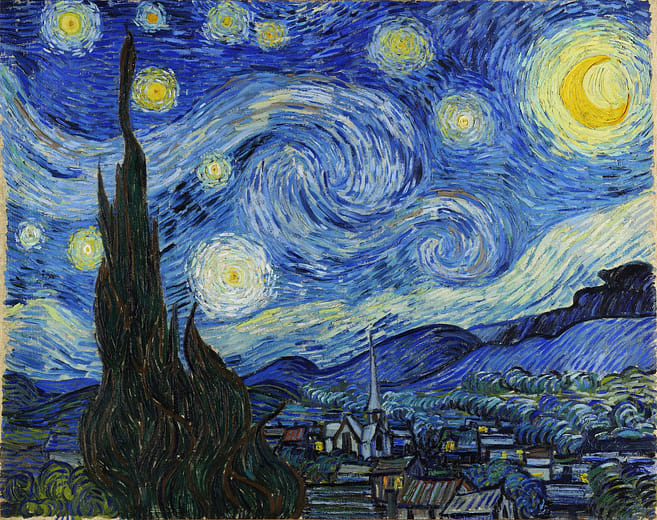
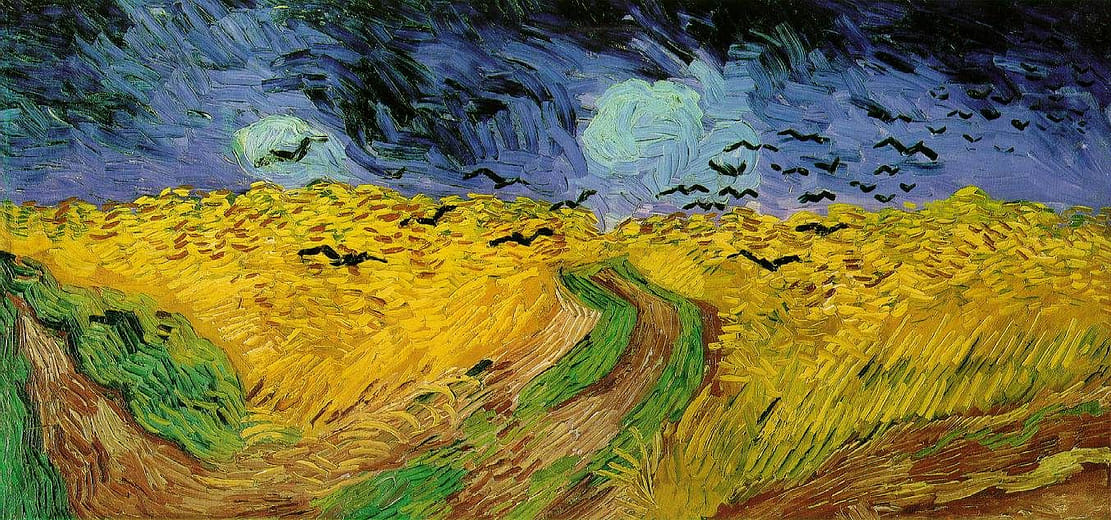
Van Gogh, a Dutch Post-Impressionist painter, was a forerunner of early 20th-century Expressionism, a movement where artists conveyed their inner emotions through their work, rather than focusing on the precise depiction of their subjects.
Van Gogh's later works are marked by their intense and unique style, overflowing with emotion and boundless imagination, leaving a profound influence on the Fauvist and German Expressionist movements.
The painting “Bedroom in Arles” is part of a series of three works Van Gogh created based on his own bedroom. Dominated by a vibrant yellow palette, the room becomes a distinctive “Yellow House” through the artist’s brushstrokes. When Van Gogh moved into this “Yellow House” in 1888, he envisioned it as a gathering place for artists to exchange ideas. While the living room was meticulously arranged, his bedroom, as depicted in the painting, was unexpectedly simple and unpretentious. The painting reveals a simple yet vibrant contrast of colors, blue, orange, green, red, and white. Even with the deliberate omission of shadow details, it brims with power and impact. Regarding Bedroom in Arles, Van Gogh noted: “This time, it’s just my bedroom. In this painting, everything is determined by color… Through color, I aim to convey the atmosphere of rest or sleep. When I step into this room, my imagination can finally find peace”.
After visiting Van Gogh’s cozy yellow room, let’s add some flowers to brighten it up! “Sunflowers” seem like the perfect fit!
The Sunflowers series is one of Van Gogh’s most iconic still-life works, comprising seven paintings that capture sunflowers in various stages of bloom and decay. During August, when sunflowers are in full bloom, Van Gogh gathered them to arrange in vases and, over six days, created four of the pieces in this series. These vibrant paintings were intended to decorate the room prepared for Gauguin’s stay at the Yellow House.
Unfortunately, the relationship between Van Gogh and Gauguin was as tumultuous as it was inspired. Though they admired each other’s work, their vastly different personalities made harmony impossible. Like clashing complementary colors, their friendship was marked by tension. In 1888, while Van Gogh was working on Sunflowers, he invited Gauguin to spend the winter in Arles. However, their camaraderie unraveled dramatically. On December 23, just before Christmas, an intense argument led to Van Gogh’s infamous breakdown, where he cut off his ear in a fit of madness. Gauguin, deeply shaken, left for Paris shortly afterward.
For Van Gogh, sunflowers symbolized brightness, warmth, and the essence of friendship. In a letter to his brother Theo, he once wrote: "The sunflower is mine, in a way.”
The four Sunflowers paintings he began in 1888 were centered around the golden yellow and orange hues of the flowers, yet each piece featured distinct backgrounds and flower arrangements.
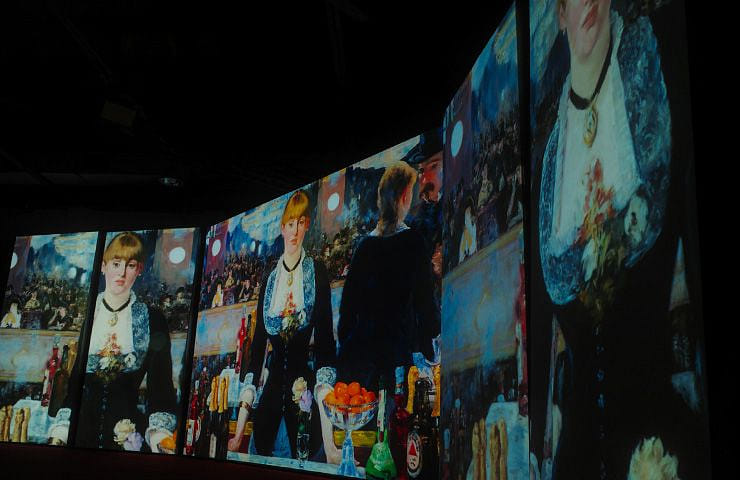
In January 1889, Van Gogh revisited his third and fourth sunflower paintings from the previous year as references and created three additional Sunflowers. For this 150th Anniversary Immersive Art Exhibition of Impressionism, the selected piece is a replica of the third sunflower painting from 1888, completed in 1889. This work is currently housed in the Philadelphia Museum of Art. Although the composition remains consistent, Van Gogh made subtle adjustments to the dimensions and brightness of the colors, enhancing their saturation in this later version. Despite the cracks that had formed in the friendships that inspired these works, Van Gogh, even in the later stages of his career, ensured that his beloved Sunflowers continued to bloom with vibrant life.