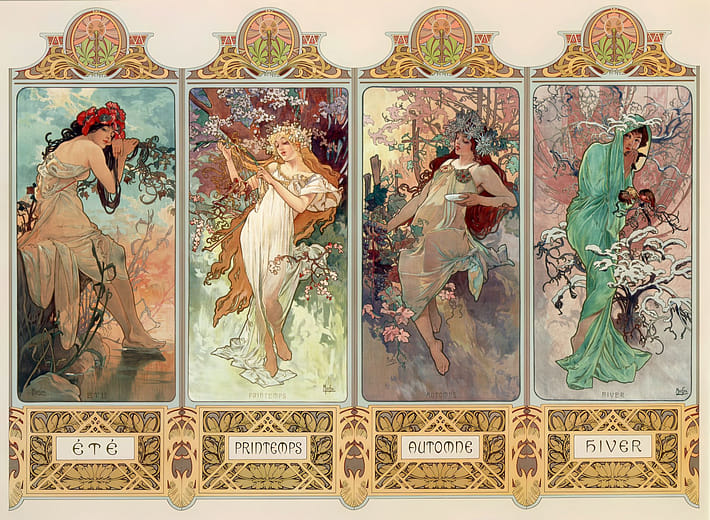
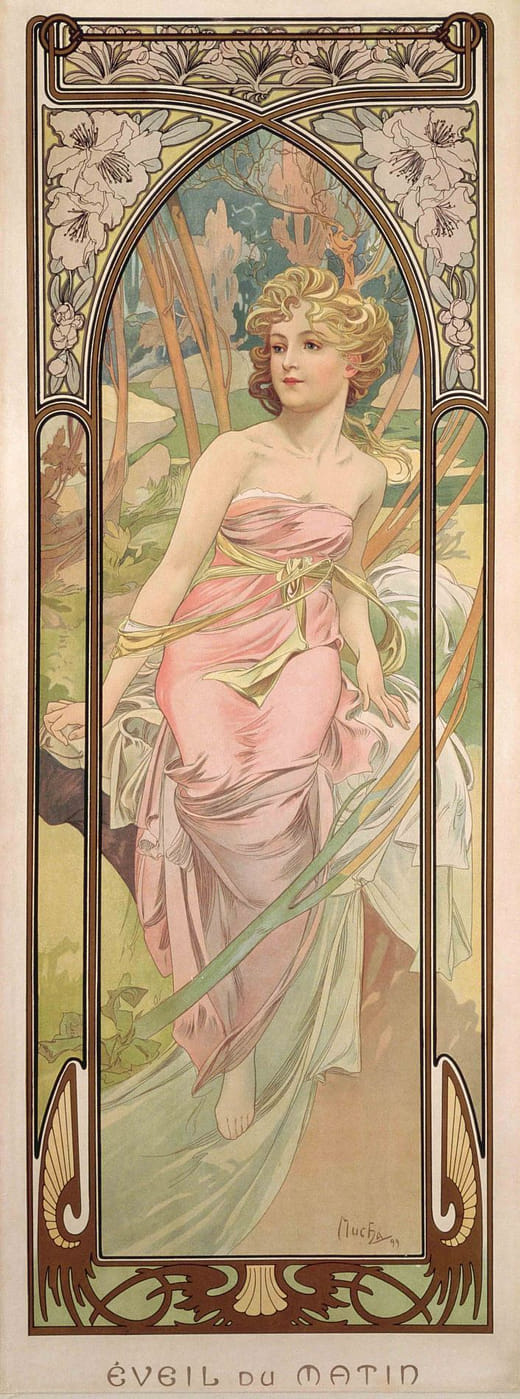
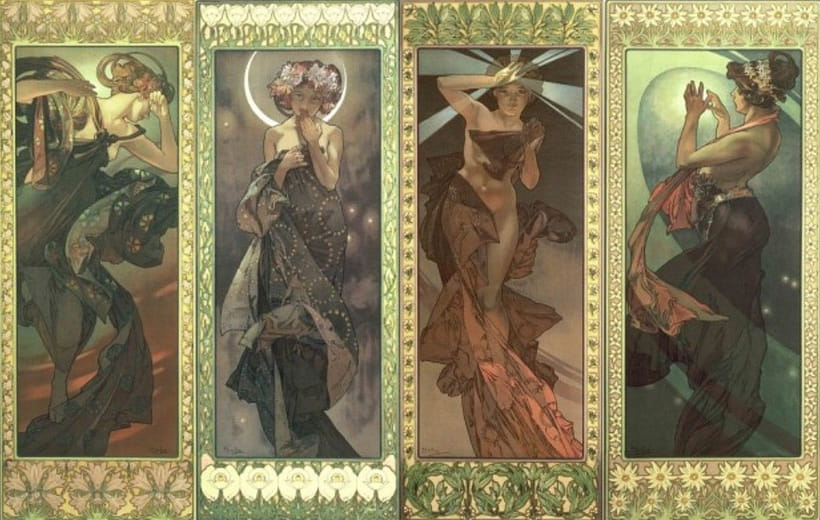
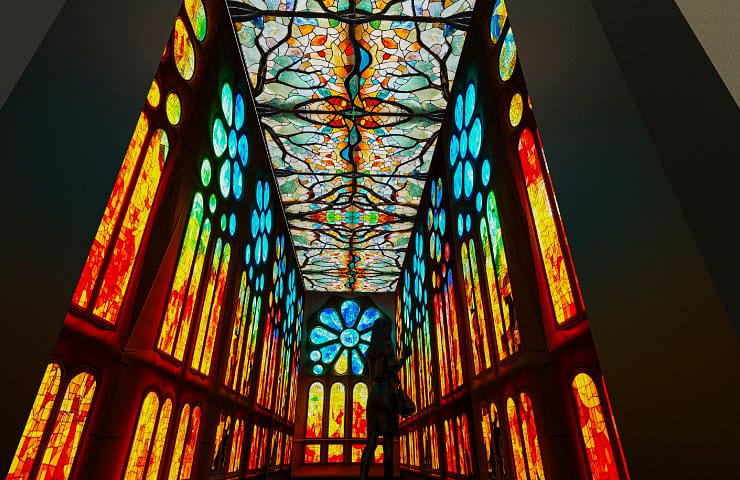
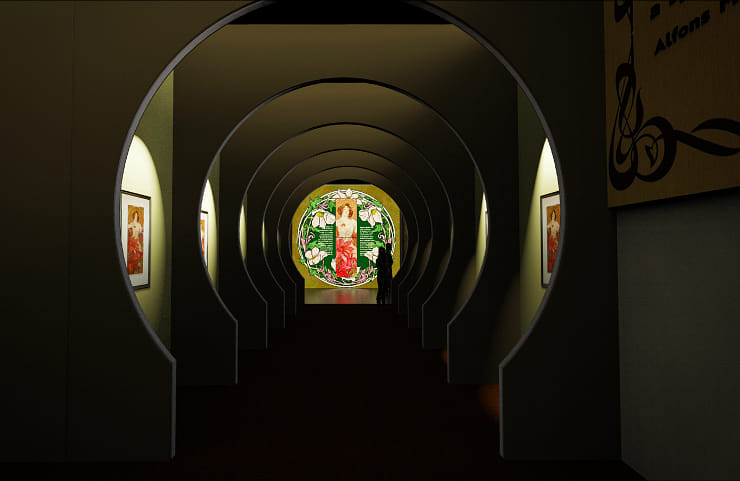
In the Golden House exhibition area, we can see works by Klimt and Mucha. Welcome to the golden world of the Art Nouveau movement. Please immerse yourself in beautiful and radiant moments of artistic brilliance.
Klimt once said, “Anyone who wants to understand me should carefully look at my paintings and see my essence and intention within them”.
Known for leading the Austrian Secessionist movement, Gustav Klimt is most famous for his golden period, which began after 1890. Before this period, he was a typical academic artist, working on murals and classical theme works commissioned for large decorative projects. However, after receiving a government commission in 1900 to paint murals for the University of Vienna's main hall, depicting philosophy, medicine, and law, his provocative and slightly erotic style caused a major controversy. This led him to reject any form of state support and instead follow his artistic path. His style underwent a transformation, incorporating themes of sexuality, death, dreams, desires, hope, and other psychological elements. He began using gold leaf in his paintings, along with intricate decorative elements like flowers, vines, and geometric patterns, creating an unmatched intensity and opulence, along with subtle erotic metaphors. Influenced by Byzantine mosaics during his travels in Italy, works such as The Kiss and Portrait of Adele Bloch-Bauer I are notable for their beautiful mosaic elements and Eastern-inspired ukiyo-e aesthetic, vibrant colors, fluid lines, and emotionally charged compositions—sometimes joyful and uplifting, other times melancholic and mysterious.
Klimt's works have successfully entered the public eye, not only setting high auction records but also being featured on a variety of merchandise. His fame is second to none among the Art Nouveau artists. Interestingly, the Museum of Art History in Vienna even held a humorous exhibition in 2012 titled “Worst Klimt Merchandising”, where the winner was a goose egg inlaid with pearls, which, when opened, revealed a reproduction of The Kiss, highlighting his immense popularity. Sadly, Klimt passed away in 1918 due to the Spanish flu, marking the end of an era of golden brilliance. Nonetheless, his artistic breakthroughs in balancing sensuality and beauty left a profound impact on the world, and his works remain a shining chapter in the history of the Art Nouveau movement.
Czech national treasure artist Alphonse Mucha was a versatile genius and was exceptionally talented in music as well, having been selected for the choir at his high school. In addition to painting, his works extended to sculpture, theater set design, poster design, interior architecture, jewelry design, and graphic design. Throughout his life, Mucha had significant patrons. In order to pursue his passion for painting, he moved to Vienna to work as a theater set designer, but after losing his job due to an accident, he met his first benefactor, Count Egon Khuen-Belasi, who funded his studies at the Munich Academy of Fine Arts in Germany. After moving to Paris in 1888, Mucha lost the financial support from his benefactor but met a second patron in the form of the famous French actress Sarah Bernhardt. On Christmas Eve in 1894, Bernhardt's new play Gismonda was about to open in the new year, but they had no poster for the promotion, and most people had gone home for the Christmas holidays. Just as they were struggling to find someone, the printer found Mucha, who was still on duty. By sheer coincidence, Mucha completed the poster design in just five days, and this marked the beginning of his fame. He signed a long-term contract with Bernhardt, and commercial design commissions quickly followed. Mucha's commercial posters, influenced by Japanese ukiyo-e flat designs, Slavic cultural colors, and exotic decorative patterns, became one of the most iconic representations of the Art Nouveau movement and inspired modern anime culture.
In addition to his famous commercial works known as the “le style Mucha”, Mucha also dedicated his artistic talents to his beloved homeland. After receiving patronage during his stay in the United States, he returned to Czech and completed the Slav Epic, an expansive series of monumental paintings about the history of the Slavic people. This work elevated his career to new, more majestic heights.