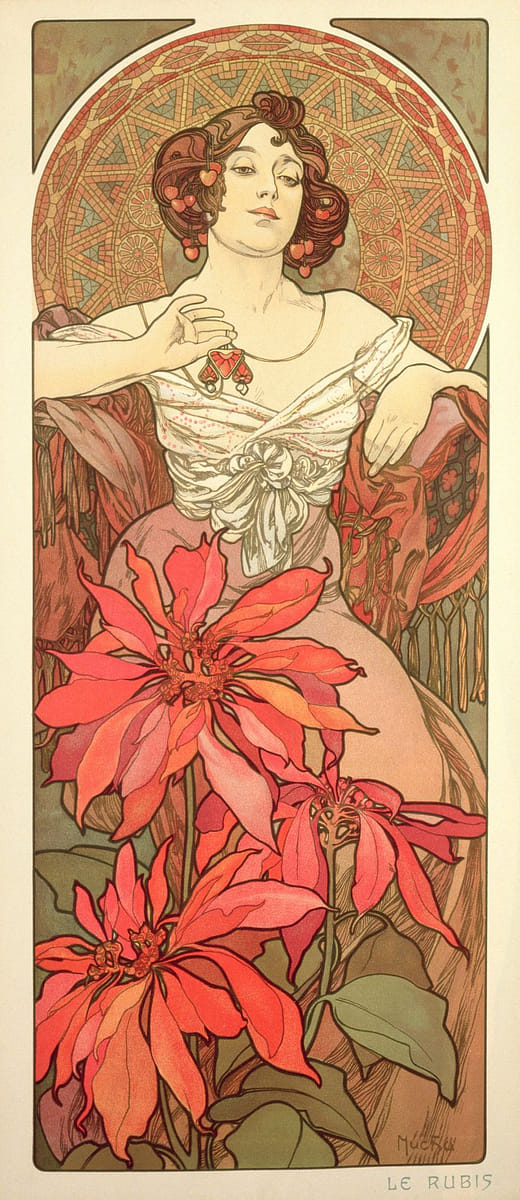
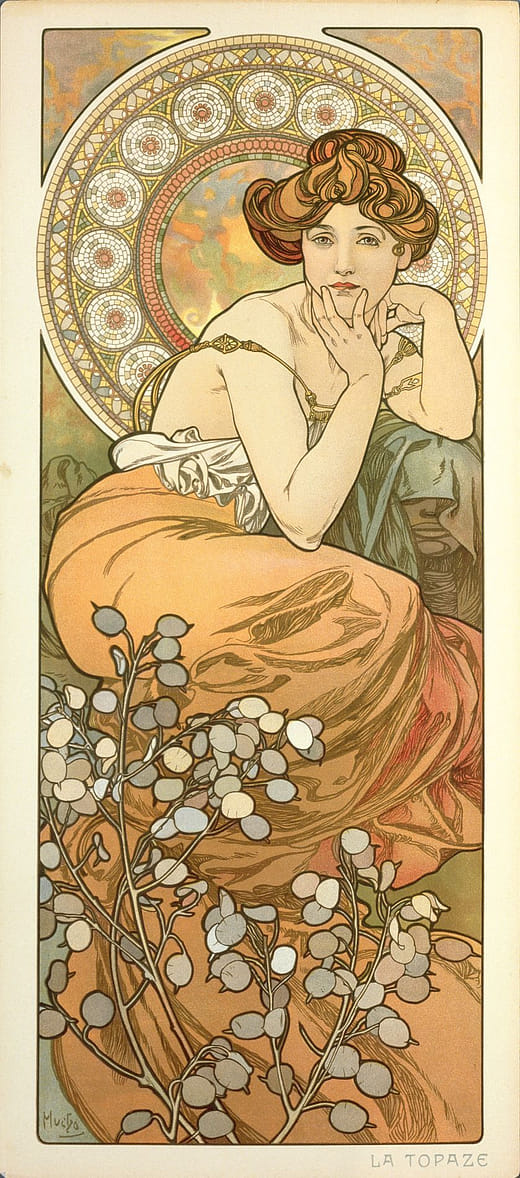
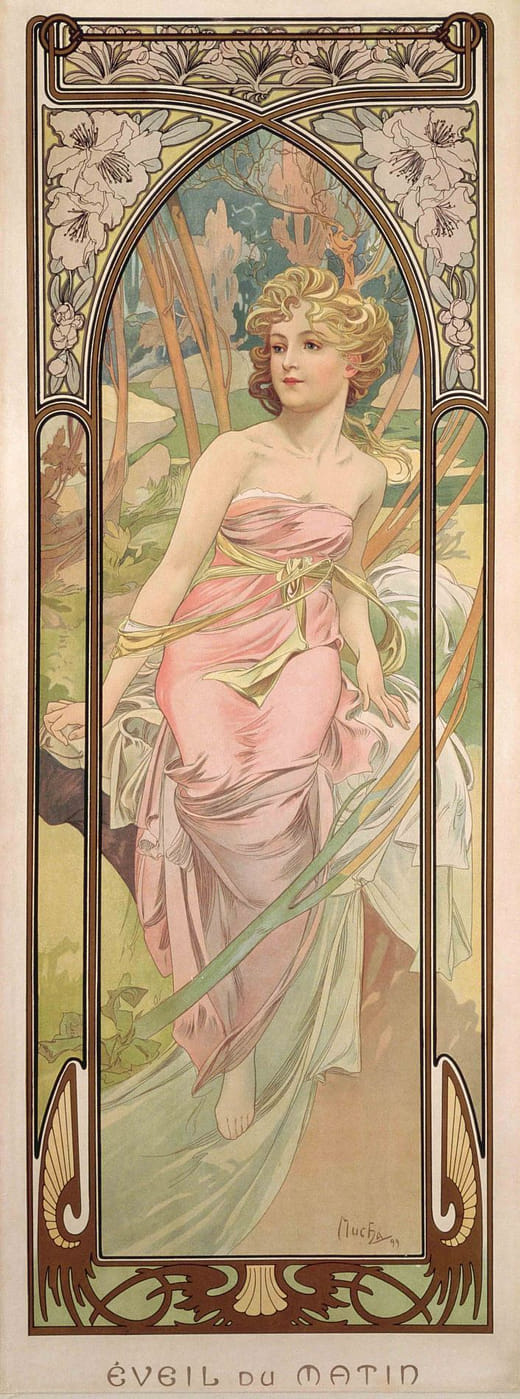
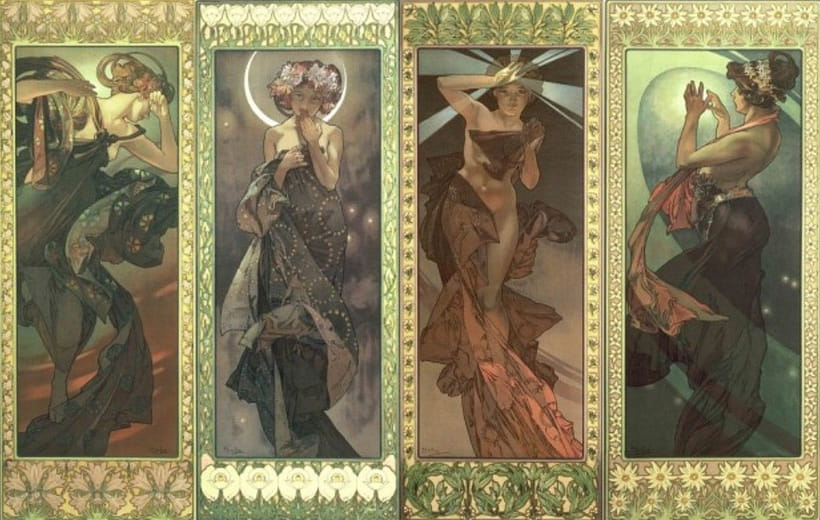
Czech national treasure artist Alphonse Mucha's “le style Mucha” caused a frenzy in the European commercial world during the Art Nouveau movement. His works, predominantly featuring female figures, natural flora and fauna, and intricate decorative patterns, perfectly blended elements from various historical and cultural sources with the flat-structure style of Japanese ukiyo-e, which was influential during the Art Nouveau period. During that time, Mucha's designs could be found on a wide variety of everyday products, including tobacco, champagne, chocolate, jewelry, home decor, and calendars. In particular, home decorations, such as folding screens, brought art into the lives of the masses, making it more accessible and no longer a luxury exclusive to the wealthy.
Starting in 1896, Mucha launched the The Seasons series, consisting of four decorative panels, which can be considered the most popular series in his “le style Mucha”. The theme of the four seasons was so well-received that publishers requested Mucha to reissue the theme in 1987 and 1900, creating works with distinct differences in tone and composition, yet equally stunning.
The version displayed in this exhibition is the first edition of The Seasons, which marks the beginning of the four-panel series' commercial success. In this work, the female figure depicted has a slender and elegant figure that aligns with European beauty standards of the time. The soft and delicate color palette, combined with the intricate and detailed floral decorations, highlights the changing seasons. The graceful posture and color choices are stunning, making this work the most popular and best-selling of the four-panel series.