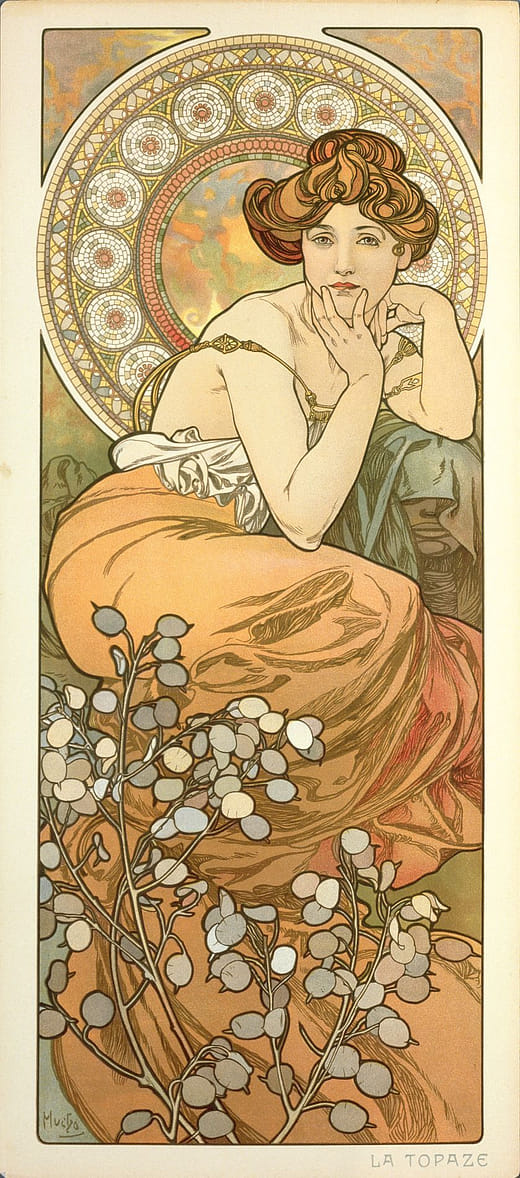
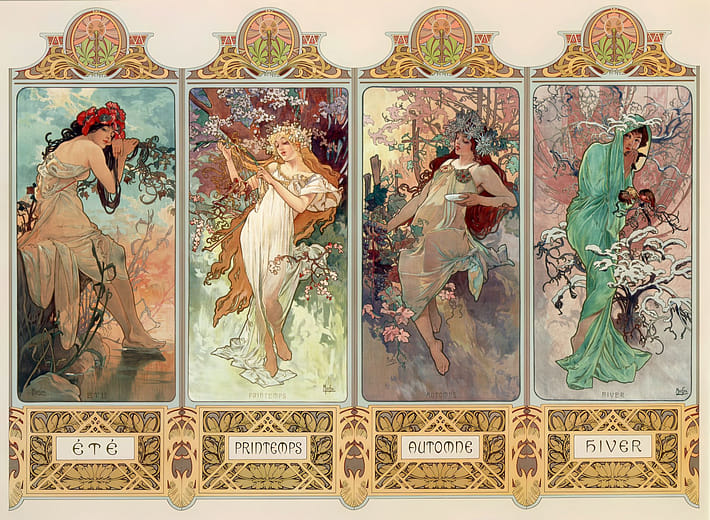
Following the success of The Seasons, Czech national treasure artist Alphonse Mucha continued his series of four-panel decorative works from 1896 to 1902. These works not only solidified his reputation as the “master of Art Nouveau posters” but also, from a commercial perspective, allowed publishers to produce Mucha's designs in a way that made them affordable to a wider audience. Art was no longer seen as something exclusive to the privileged few; it became accessible to the masses and began to spread more widely. Much of Mucha's four-panel decorative works became highly sought-after pieces for collectors.
Mucha believed that creating beautiful works of art would improve the quality of life.As an artist, he felt it was his duty to promote art more widely to the public. The mass-produced decorative panels, such as folding screens, were the ideal medium through which Mucha could realize this ideal. Mucha described his four-panel series for the decorative panels this way: “I am glad to be involved in creating art for the people, not for private living rooms. The low price of the decorative panels makes them accessible to the general public, and they can be used in both poor and wealthy households”.
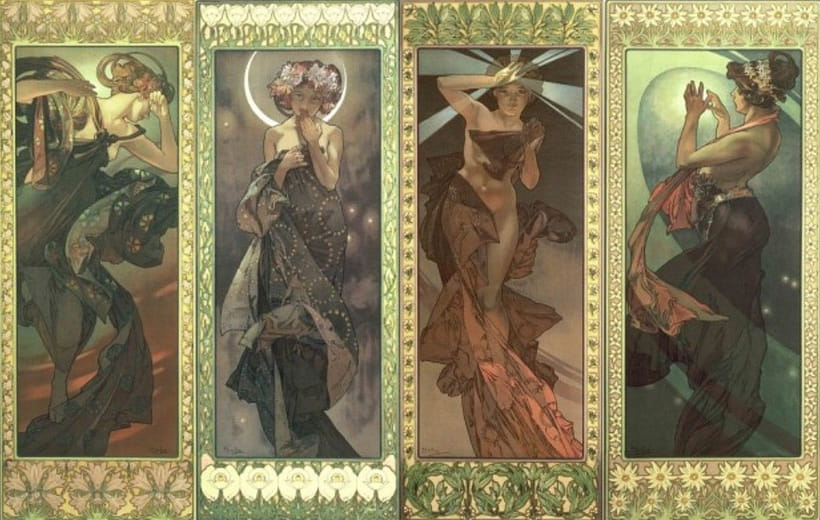
In 1899, Mucha once again released The Times of the Day, a perfect portrayal of the daily activities of a person. It begins with “waking up in the morning”, transitions to enjoying the “bright daylight”, moves into the “evening moments of contemplation”, and concludes with the “rest at night”. During this period, the intricate floral decorations that once dominated the visual field began to recede and transformed into background borders, creating a window-like effect. This approach better reflects the sensation of someone observing the passage of time through a window. Mucha also placed greater emphasis on the depiction of the characters' expressions and the shadows and folds of their clothing. The sense of volume from European classical techniques gradually coexisted with the flatness of the ukiyo-e style, achieving a more harmonious and mature balance.