This artwork, Isolde, is inspired by Richard Wagner’s opera Tristan und Isolde, which itself originates from ancient Celtic legends of the Western European Mediterranean. Since the 12th century, this tale has significantly influenced Western art, literature, and music, inspiring numerous adaptations while retaining its core structure—a romantic yet tragic love story.
The story follows the Irish princess Isolde, whose fiancé is slain in a war between two nations by the Cornwall knight Tristan. Wounded himself, Tristan, under an alias, encounters Isolde, who nurses him back to health. Though Isolde discovers Tristan is her fiancé’s killer, she falls deeply in love with him and forgives him. However, once healed, Tristan, oblivious to her feelings, acts as a matchmaker, arranging a marriage between Isolde and King Mark of Cornwall. Heartbroken, Isolde plans to poison herself and Tristan with a death potion, but mistakenly administers a love potion instead, leading them to finally reciprocate their feelings for each other. Just as happiness seems within reach, a series of coincidences and misunderstandings arise. King Mark, unable to accept their love, creates conflict, driving Tristan into despair. Gravely wounded in a duel, Tristan dies in Isolde’s arms just moments before King Mark and others arrive to reveal they had forgiven and blessed the couple. Overcome with grief, Isolde follows Tristan in death, leaving their tragic love unfulfilled in life despite their deep connection.
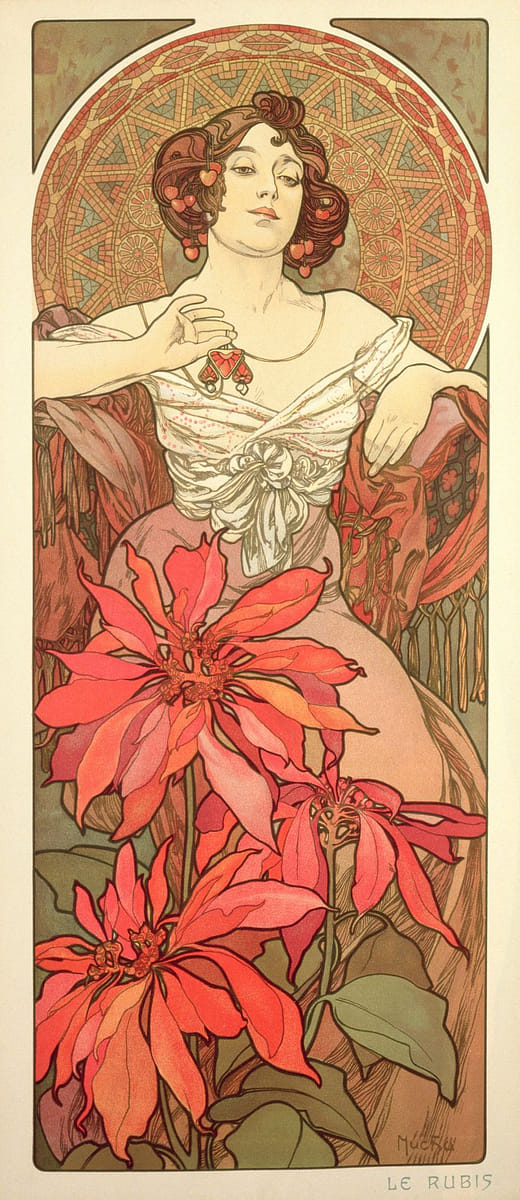
Aubrey Beardsley, a prominent late 19th-century British illustrator and writer of the Aestheticism movement, was known for his use of large areas of black and white in his works. However, this piece is a rare example of his color illustrations. It depicts the beautiful Irish princess Isolde at the moment she drinks the love potion. Unlike Beardsley’s other works, which often feature eerie expressions and exaggerated bodily poses, this illustration conveys warmth through the use of vivid orange-red hues, symbolizing the passion of love while alluding to the blood that signifies both life and death. The striking visual impact of this piece poignantly communicates the deep sorrow and lingering regret of this tragic love story.