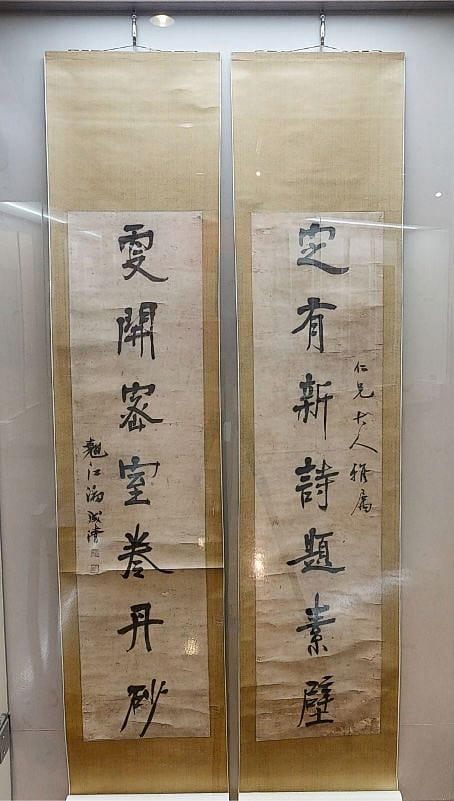
施景琛/廣
鹿港林孝女祠記
1872-1955
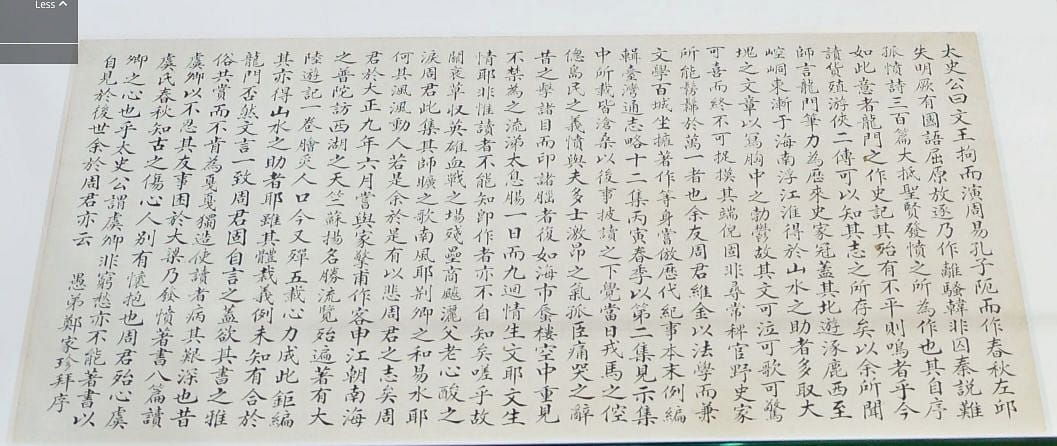
Shi Jingchen/ Record of Lukang's Lin Filial Piety Daughter Tem
32X45cm 館藏2014-1-0095
二次歐戰發生,盟機轟炸台灣,廢續不絕。惟鹿港媽祖廟左近受炸甚烈,摧毀房屋數十
【釋文】
棟,死傷民眾數十人。而媽祖剛則如魯殿靈光,巍然獨存,是媽祖呵護之力也。按姆祖宋時生於興化湄洲,其父兄墜水,媽祖以荏弱女子,纖纖女手,覓父尸而歸,里人視之以為神,死則以神奉之。祠宇編設國內國外。民國十八年內政部頒發神祠存廢標準,凡合於先哲則保存之,近於淫祠則撤廢之。畢國媽祖廟援引事實,籲請保存,均已太令保存條例取斥。適余藏有道光間楊雪滄先生所著湄洲志,內載興化陳池養太史林孝女傳一篇,余據以上間,省府轉請內政部核斷。蒙準符合保存先哲條例,通令保存。惟應改為林孝女祠等語。台灣已歸本國版圖,自應遵照部令,改為林孝女祠,以示一律。民國三十八年五月十八日,余參謁鹿港媽祖廟貌,謹誌數語與各董事一商榷焉。
【説明】
施景琛,字涵宇,同治11年(1872)生於鹿港,早年僑居福州,光緒23年(1898)年中式帮人。
此文稿為抗戰前致力於福建各地文物保存的關人施景琛於1949年造訪鹿鹿港天后宮時所撰。文稿提供的訊息頗為豐富,敘及鹿港1943年的崎仔腳爆擊事事件中姐靈事跟也提及國民政府於民國18年(1929)進行的神祠存廢標準,並以溯源螂祖林默娘神仁聖蹟之有稽可考,才得以「孝道」的價值來來保存媽祖信仰云云。
Shi Jingchen / Record of Lukang's Lin Filial Piety Daughter Temple
1872–1955
32 x 45 cm, Collection No. 2014-1-0095
Text Translation:
During the Second World War, allied bombers heavily attacked Taiwan, causing extensive destruction. Near the Lukang Mazu Temple, numerous houses were destroyed, and dozens of civilians were killed or injured. Yet, the Mazu Temple stood miraculously intact amidst the devastation, a testament to Mazu's divine protection.
According to records, Mazu was born during the Song Dynasty in Meizhou, Xinghua. As a frail young woman, she retrieved her father’s body from the water with her delicate hands, earning the reverence of the local villagers. After her death, she was deified and worshipped. Temples dedicated to her were built both domestically and internationally.
In 1929, the Ministry of the Interior issued criteria for preserving or abolishing religious sites. Temples honoring revered historical figures were to be preserved, while those deemed superstitious were to be abolished. The Lukang Mazu Temple, invoking its historical and cultural significance, successfully petitioned for preservation under these regulations.
In the process of preserving the temple, I referenced a biography of Lin Xiaonü (the Filial Daughter Lin) written by Chen Chiyang, a historical scholar from Xinghua, as documented in Meizhou Records by Yang Xuecang during the Daoguang period. Based on this evidence, the provincial government forwarded the case to the Ministry of the Interior, which approved the temple’s preservation, provided it was renamed Lin Xiaonü Temple to align with the principle of honoring filial piety.
As Taiwan has returned to the governance of China, we must comply with the Ministry's directive and rename the temple to Lin Xiaonü Temple to reflect uniformity. On May 18, 1949, during my visit to the Lukang Mazu Temple, I composed this note to discuss the matter with the temple board members.
Description:
Shi Jingchen, courtesy name Hanyu, was born in 1872 in Lukang. In his early years, he resided in Fuzhou and achieved success in the 1898 provincial-level imperial examinations.
This manuscript was written during Shi Jingchen’s 1949 visit to the Lukang Tianhou Temple. Known for his efforts in preserving cultural relics in Fujian prior to the war, Shi’s text provides valuable insights. It recounts the 1943 bombing near Lukang, highlights the miraculous survival of the Mazu Temple, and discusses the Nationalist Government's 1929 criteria for temple preservation. Shi connected the historical deeds of Lin Moniang (Mazu) to the value of filial piety, ultimately securing the preservation of the Mazu faith through its moral and cultural significance.