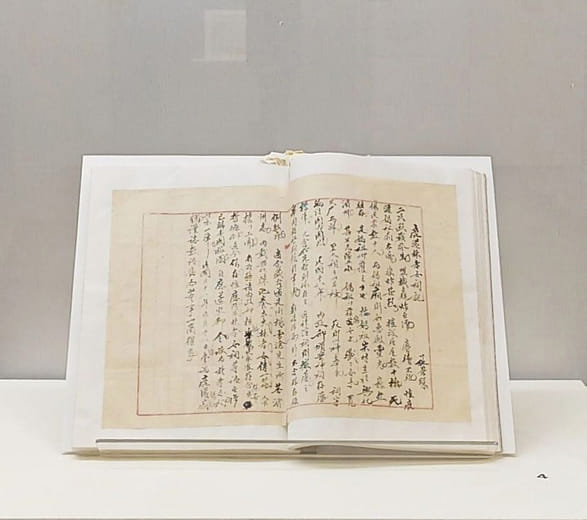
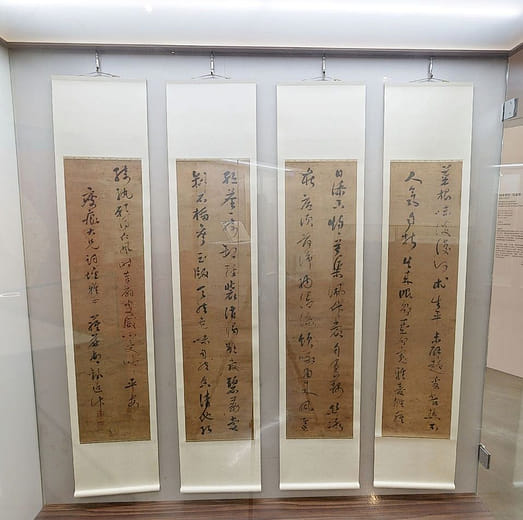
施士洁/致陳懷澄信札(頁3)
1856-1922
Shi Shijie/ Letter to Chen Huaicheng
24X36cm(X3) 館藏2019-1-0188
【說明】
施士洁,原名應嘉,字漂舫,號芸況、喆園,晚號耐公,臺灣賺(今臺南)人。施土洁於光緒2年(1876)參與丙子恩科春試,中三甲二名。其父施瓊芳(1815-1868)亦是進士,為臺灣科舉史上唯一的父子進士。
此次展示的書信是施氏與好友們往來的詩詞唱和,信中提及的「鷺門」,即是廈門。施氏因乙未割臺(1895),舉家內渡至原籍福建晉江西岑,本人則長期往來廈門與福建之間。就書信內容可知寫作當下施氏已經內渡,所有信件需依靠友人的幾經轉手,才能到達舊友手中。款識為「鯤島棄民施士洁西岑呈稿」,更展現身處乙未變局之文人的辛酸與無奈。
Shi Shijie / Letter to Chen Huaicheng (Page 3)
1856–1922
24 x 36 cm (x3), Collection No. 2019-1-0188
Description:
Shi Shijie, originally named Yingjia, courtesy name Piaofang, also known as Yunkuang and Zheyuan, later referred to himself as Naigong. He was a native of Taiwanfu (modern-day Tainan). In 1876, during the Guangxu Emperor's second year, Shi participated in the imperial provincial examinations and ranked second in the third division. His father, Shi Qiongfang (1815–1868), was also a Jinshi, making them the only father-son pair in Taiwan’s imperial examination history to achieve this title.
The showcased letter is part of Shi Shijie's poetic exchanges with friends. The term "Lumeng" mentioned in the letter refers to Xiamen. Following the 1895 cession of Taiwan to Japan, Shi’s family relocated to their ancestral home in Xicen, Jinjiang, Fujian. Shi himself frequently traveled between Xiamen and Fujian. The letter reflects this displacement, as correspondence required multiple exchanges among friends before reaching its intended recipients.
The inscription, "Draft presented by Shi Shijie, an abandoned citizen of Kun Island, at Xicen," poignantly captures the hardship and helplessness of a Taiwanese literatus caught in the tumultuous era of the 1895 transition.