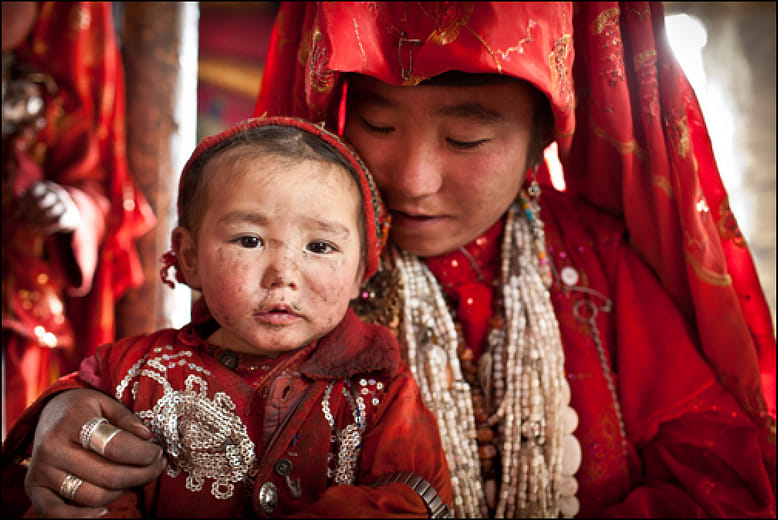
In the picturesque town of Svaneti, nestled in the Caucasus Mountains of northwest Georgia, a beautiful student named Nana Merlani rehearses opera performances with her village’s folk choir. There’s nothing more captivating than a focused person, especially when their passion is directed toward preserving the rich traditions of Svan songs and dances. In this high-altitude region, the highest inhabited area in Europe, a group of passionate young people is tirelessly working to revive their ancient cultural heritage.
Historically, Svaneti is divided into “Upper Svaneti” and “Lower Svaneti”. One of the most notable features of Upper Svaneti is its medieval Svaneti towers, built between the 9th and 12th centuries. These remarkably well-preserved structures earned Upper Svaneti a place on the UNESCO World Heritage list in 1996, recognized for its unique combination of architectural, natural, and cultural landscapes.
For a task that involved photography on historic, aged structures, photographer Aaron Huey was constantly on edge, making sure he captured the images he envisioned while also staying safe and avoiding falling to his death, a truly challenging photographic endeavor. After his first trip to Svaneti in 1998, he returned 14 years later to this ancient and captivating mountain town in the Republic of Georgia. In the Caucasus Mountains, he once again stepped into a medieval European world, seeking to reconnect with the people and places he had photographed during his first visit.
Many of the children Aaron photographed during his initial visit had since grown up and moved to bustling cities in search of opportunities beyond Svaneti. Yet, he was fortunate to reconnect with one of his former subjects—a green-eyed girl named “Tata”, now a young woman. As they strolled and chatted, Aaron pieced together connections to his previous visit. Though Tata was not the student in the photo of Nana Merlani, the reunion allowed him to revisit the Svaneti youth choir he had captured in 1998. Together, they recreated scenes from his first journey: the hauntingly beautiful Svan polyphonic songs and dances known for their ancient three-part harmonies and circular choreography. The dissonant yet unforgettable chords of these melodies, deeply tied to the Svan language, continue to resonate through time, carried on by the efforts of the younger generation. As Aaron wrote in his memoir of Svaneti, “Fourteen years later, the story has come full circle”.
Aaron’s second project in Svaneti may have concluded, but the cultural revival of this region remains vibrant. Much like the radiant face of the student in the photograph, it is earnest, alive, and filled with vitality.