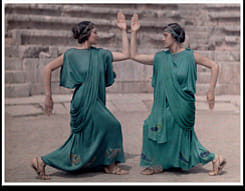
In India, women adorn themselves with intricate and elaborate jewelry from head to toe. These traditional ornaments produce silvery, bell-like metallic sounds as they walk or dance. While symbolizing social status, they also carry a bittersweet significance. Though the love of beauty is universal for women, in India—a global leader in jewelry and gemstone production—anklets hold a unique cultural meaning.
Also known as ankle bells, anklets serve two primary purposes: everyday adornment and for dancing. When these anklets are worn, shoes are not worn to preserve the purity of the metal’s sound. Dance anklets are believed to summon deities and ward off evil, while regular anklets historically served as a means of control, designed to deter infidelity. Their intricate designs create jingling sounds with every step, functioning like a “GPS” to track a woman's movements. Like the nose rings worn by married Indian women, these ornaments carry an inherent element of restraint. Over time, as society has evolved, anklets and other traditional accessories have become symbols of identity, status, and wealth for Indian women. Anklets and nose rings made from various materials, such as pure gold, silver, pearls, and expensive gemstones or diamonds, represent an additional layer of social class distinction and symbolize a woman’s status and wealth.
This photograph, while evocative, cannot be definitively attributed to Eliza R. Scidmore, as she was better known as a travel writer than a photographer from the US. Active in the late 19th and early 20th centuries, Eliza wrote extensively about Asian cultures for National Geographic. This close-up photograph showcasing traditional Indian jewelry is commonly found in catalogs displaying Indian cultural artifacts from the late 19th-century colonial period. Many photographic works capturing Eastern and Indian cultures feature compositions strikingly similar to this one.
Through Eliza R. Scidmore’s writings, we gain a deeper understanding of how, in India, the beauty of these ornaments also reflects a framework of constraints imposed on women. Perhaps the radiance of these dazzling jewels offers a small measure of comfort amidst such realities.