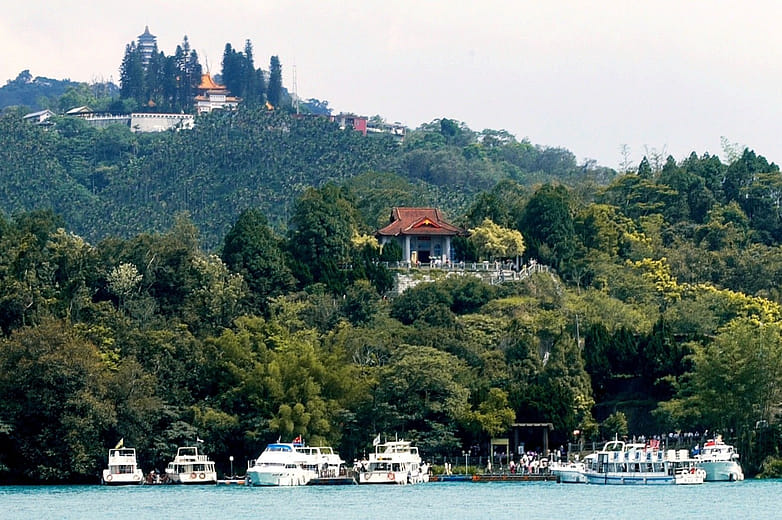
At the center of Sun Moon Lake lies Lalu Island, a small yet culturally significant landmark. Throughout history, the island has borne various names, reflecting the shifting times and cultural influences. In Qing dynasty records, it was called “Zhuyu” or “Zhushan” (Pearl Island or Pearl Mountain). During the Japanese colonial era, it was renamed “Yushima” (Jade Island), symbolizing its preciousness. After World War II, the Nationalist government renamed it “Guanghua Island,” meaning “Glory of China.” In recent years, in recognition of the indigenous Thao people's heritage, the island was officially restored to its Thao name, “Lalu,” meaning “Sacred Island of the Heart.”
Lalu Island holds a special place in Thao culture as the sacred dwelling of their highest ancestral spirits. The Thao believe that these spirits reside within the island's two Autummn Maple Tree, which are not only natural landmarks but also revered symbols of faith. According to tradition, women aspiring to become “sian-sinn-má,” the Thao term for female shamans, must journey to Lalu Island with the guidance of senior shamans. There, through ancestral revelation, they learn whether they are chosen, officially marking their initiation into this sacred role.
The 1999 Chi-Chi Earthquake caused significant environmental changes to Sun Moon Lake, resulting in landslides that greatly reduced the size of Lalu Island. The island was subsequently closed to the public. Today, only during the annual April shaman selection ceremonies are the Thao permitted to set foot on the island to perform their traditional rituals. During this time, boats on Sun Moon Lake halt operations to honor the solemnity of the occasion.
Lalu Island is both a symbol of Thao tradition and a testament to the rich historical tapestry of Sun Moon Lake. Though visitors can no longer set foot on the island, its sacred beauty and cultural significance continue to captivate all who gaze upon it from afar.