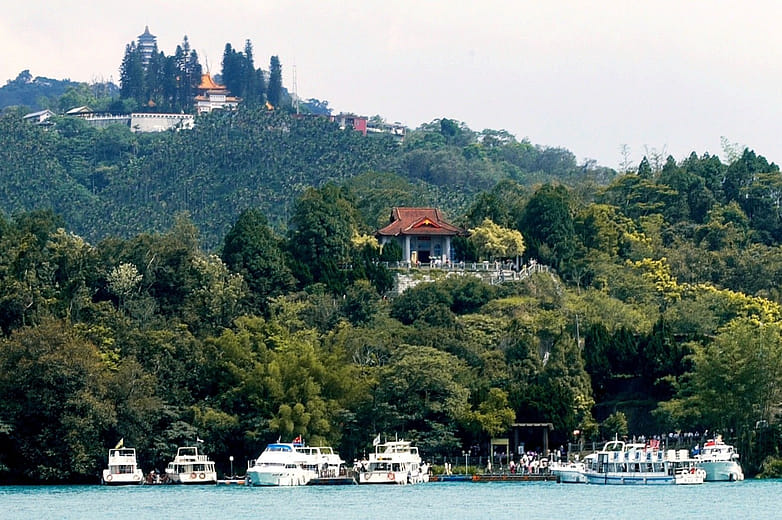
Xuanzang Temple is dedicated to the esteemed Tang Dynasty monk, Master Xuanzang. The story of his sacred relics, particularly his cranial bone relic,also called sarira, is deeply intertwined with Sino-Japanese relations.
During the Second Sino-Japanese War, Japanese forces looted Xuanzang’s cranial bone relic from Nanjing and enshrined it in Ci'en Temple in Saitama Prefecture, Japan. In 1955, Japan returned part of the relic to the Republic of China, where it was temporarily housed at Xuanguang Temple by Sun Moon Lake. In November 1965, following the completion of Xuanzang Temple, the relic was ceremonially transferred to its current location, where it remains enshrined to this day.
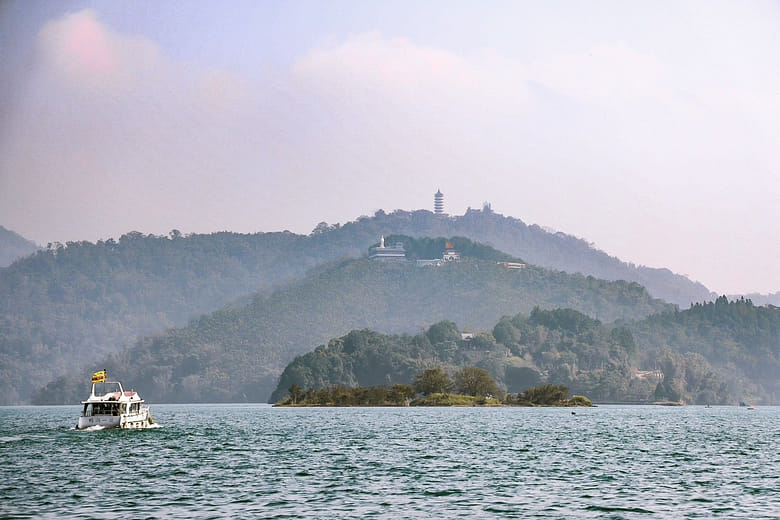
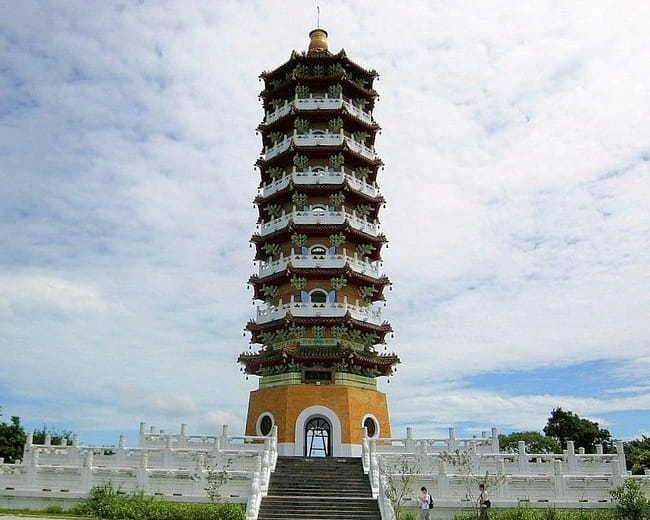
The Mount Erlong area is steeped in mystical lore due to its unique feng shui characteristics. It is said that when viewed from afar, Cien Pagoda resembles a giant sword piercing the heart of a reclining dragon—believed to represent the dragon vein, a source of powerful energy, of Sun Moon Lake.
According to local legends, the construction of Cien Pagoda disrupted the feng shui that had supposedly blessed Sun Moon Lake as a place capable of producing presidents, adding an air of mystery to the lake's stunning natural and cultural landscape.