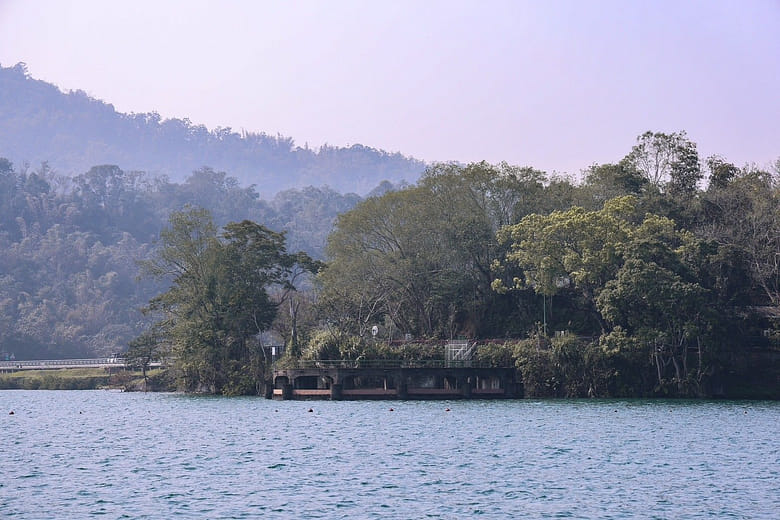
During the Japanese colonial period, Japan implemented the economic policy of "Industrial Taiwan, Agricultural South Seas" to meet the growing demand for industrial electricity. In 1919, Taiwan Denryoku Kabushiki Kaisha was established, and in 1934, the Sun Moon Lake Hydroelectric Power Plant, including the Daguang Power Plant – Daguang I, was completed. This power generation system became one of Taiwan's earliest hydroelectric facilities. By the 1950s, the Sun Moon Lake power system still accounted for 70% of Taiwan's total electricity generation, earning it the nickname "The Heart of Taiwan."
Originally, the depth of Sun Moon Lake was about 6 meters. To increase its water storage capacity, the Shuishe Dam and Toushe Dam were gradually constructed, raising the water level by 18.18 meters to its present form. Additionally, as a tidal reservoir, Sun Moon Lake receives water from the Wujiang Dam in Ren'ai, which diverts water from the Zhuoshui River through a 15-kilometer-long water diversion tunnel into the lake. However, due to the aging of the old tunnel, the primary water supply now relies on the newly completed Wujiang Water Diversion Tunnel in 2006.
After the first global energy crisis in the 1970s, many countries began developing pumped-storage hydroelectricity technology. With Taiwan's rapid economic growth and the resulting surge in electricity demand, including the "Ten Major Construction Projects," the government promoted a pumped-storage generation plan. This led to the completion of the Daguang Power Plant – Daguang II in 1985 and the Mingtan Power Plant in 1995.
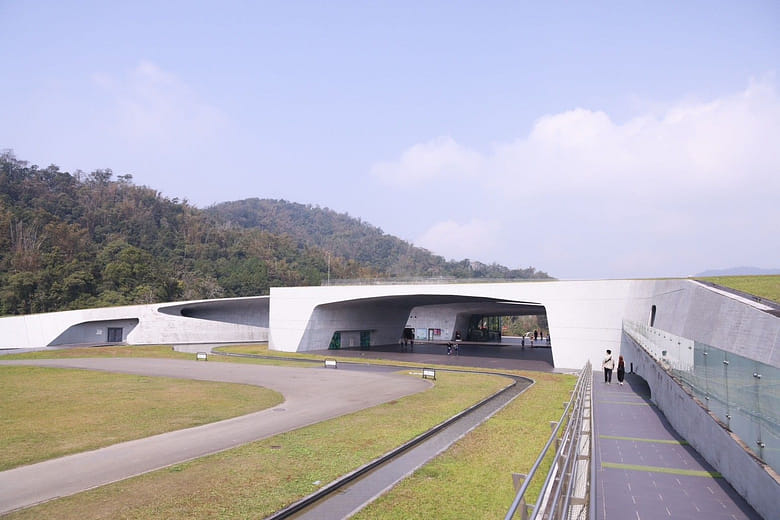
Daguang I uses conventional power generation technology, utilizing the 320-meter height difference of Sun Moon Lake. Water released from the dam drives turbines via gravity, which are connected to generators to produce electricity. Daguang II and Mingtan Power Plants use pumped-storage technology, which primarily takes advantage of the difference in electricity demand between day and night. During peak daytime electricity consumption, the plants generate electricity, and the tailwater is stored in the lower reservoirs: Minghu Reservoir and Mingtan Reservoir. When electricity demand is lower at night, excess power is used to pump water back from the lower reservoirs to the upper reservoir, Sun Moon Lake, to prepare for the next day's generation. This daily water level fluctuation results in nearly a 2-meter change in the lake’s water level.
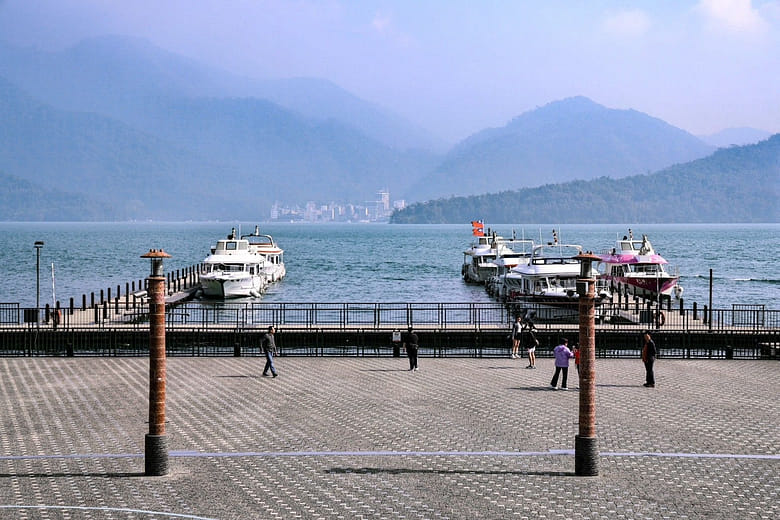
To accommodate these fluctuations, many of the boat docks around Sun Moon Lake are designed with floating platforms that adjust to changing water levels. Additionally, the water circulation caused by pumped-storage generation plays a crucial role in keeping the lake clear and preventing eutrophication. The frequent movement of water between the upper reservoir, Sun Moon Lake, and the lower reservoirs, Minghu and Mingtan, helps maintain the water's vitality.
Interestingly, if you have the chance to touch the water of Sun Moon Lake, you will find that it feels warm. This is due to the heat generated as the water flows through the power generation facilities, which raises the water temperature.