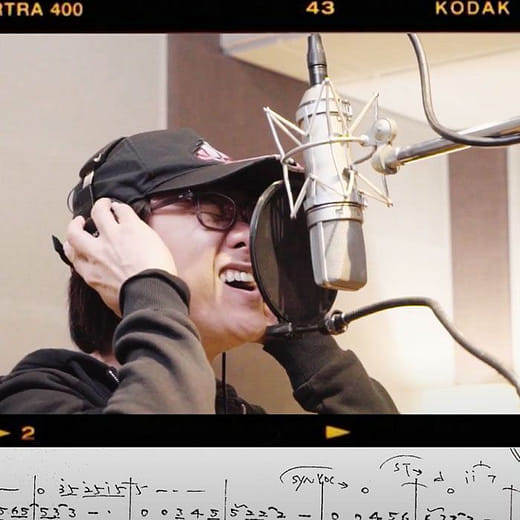
A popular musical work consisted of lyrics that touched one’s heart from the writers, fluid melodies developed by composers, and the human voices of the singers who interpreted the notes, lyrics, and melodies. Behind all these was the arranger, who used various musical instruments to make the songs fresh and three-dimensional.
For the musicians recording albums, in addition to the three instruments in the rhythm section, namely, the drums, bass, and guitar, they often included keyboards, whether the piano or electronic keyboards. To make the overall sound richer and the timbre more beautiful, stringed instruments such as violins, violas, cellos, and double basses could be incorporated. Sometimes wind instruments, such as trumpets or saxophones, were incorporated. If the song was in a Chinese style, Chinese musical instruments such as the erhu, Chinese flute, and even the pipa and yueqin might be included.
Presently, in the most ideal recording environment, the individual instruments are recorded on their own tracks. This way, it is easier for recorders to mix the instruments. However, in the 1970s to the early 80s, most recording studios were restricted by the technology of the hardware to only four or eight tracks. Of these, two tracks were the vocalists’ left and right sound channels. Consequently, in the early days, musicians often gather to get together in the recording studio to make recordings. When someone made a mistake, everyone had to start over from the beginning. This increased the difficulty and stress of recording sessions.
Recording in the early days was done under incredible time pressure. All the songs on an album typically had to be recorded in one day. Chen Chih-Yuan often monitored the musicians recording one song in one ear while wearing headphones on the other ear to listen to the demo tape of another song and writing the arrangement for it. Despite this multitasking, when a musician made a mistake or an instrument was out of tune, he could point it out precisely. Legendary stories about this were well-known among veteran recorders and musicians, surprising everyone.