On the tranquil waters of Sun Moon Lake, one can often spot traditional "Four-Hand Nets", a distinctive fishing technique of the indigenous Thao people. This apparatus, comprising four bamboo poles arranged to resemble giant hands, supports a large fishing net at its corners. The net is mounted on the front of a bamboo raft. At night, Thao fishermen light lamps or torches on the raft, utilizing the phototactic behavior of fish to attract them into the net before pulling up the catch.
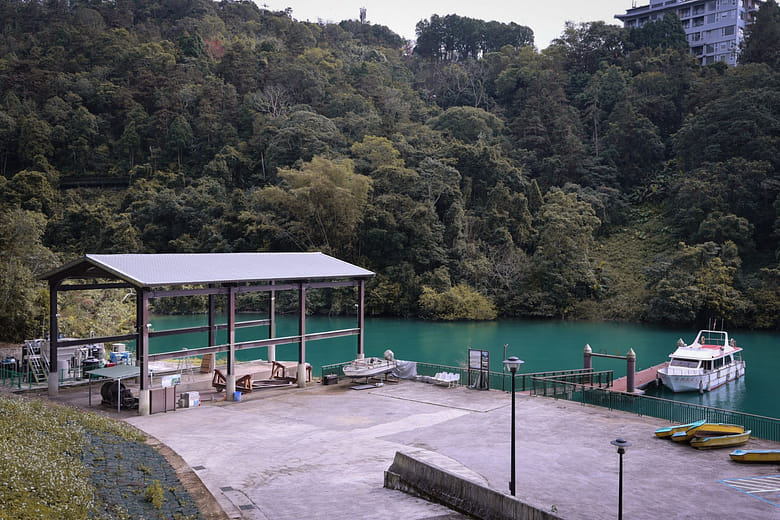
The Four-Hand Nets are often installed on custom-built boat houses, some of which have their own unique address plates marked as "Four-Corner Hanging Net Raft No. X." Due to their limited quantity, these address plates are rumored to be worth as much as 2 million $NT dollars.
The fishing practices of the Thao people are deeply rooted in an ancient legend. It is said that after migrating from Alishan to Sun Moon Lake, the Thao discovered a mystical creature in the lake with a human-like body, long hair, and a fish-like tail, named Takrahaz. Initially, the Thao coexisted peacefully with this being. However, one day, the Thao people noticed their fishing nets, eel traps, and shrimp cages were being destroyed repeatedly.
A brave warrior named Numa dove to the lakebed to investigate and discovered that Takrahaz was the culprit. After a fierce battle lasting three days, both sides, got exhausted and began to communicate. Numa learned that the Thao’s overfishing practices—catching small fish and spawning females indiscriminately while covering the lake with nets—had drastically depleted fish populations, leaving Takrahaz, who relied on fish for sustenance, in despair.
This encounter led the Thao people to a profound reflection. They began implementing ecological conservation measures, prioritizing the ecological balance of Sun Moon Lake.
To provide fish and shrimp with more space to forage and reproduce, the Thao invented the "Floating Field" technique using the lake’s native aquatic plants, creating an ideal spawning environment. Additionally, every year during the lunar seventh month, when young fish are growing, the Thao people pause fishing activities to allow fish populations to thrive.
Today, the Takrahaz Water Bike Path in Ita Thao commemorates this ecological protection story, preserving the Thao’s cultural heritage and dedication to environmental sustainability.
Research shows that Sun Moon Lake is home to 33 fish species spanning 5 orders and 9 families. These include well-known fish such as Qiaozui (Presidential Fish) and Qili (Kirii Fish), along with lake species like grass carp, silver carp, and crucian carp, as well as stream species like Taiwan barbel, Taiwan chub, and Paradise fish.
However, in recent years, illegal fish releases have introduced invasive species such as peacock bass, red devil cichlids, and pearl cichlids. These newcomers not only outcompete native species but also disrupt the ecosystem, putting some indigenous fish at risk of extinction.
To safeguard Sun Moon Lake’s ecosystem, the Sun Moon Lake National Scenic Area Headquarters strictly enforces regulations against unauthorized fish releases and actively promotes ecological conservation awareness. By fostering a greater understanding of the importance of biodiversity, everyone can contribute to preserving this precious lake and its unique natural resources.