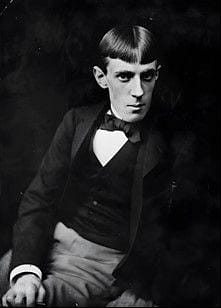
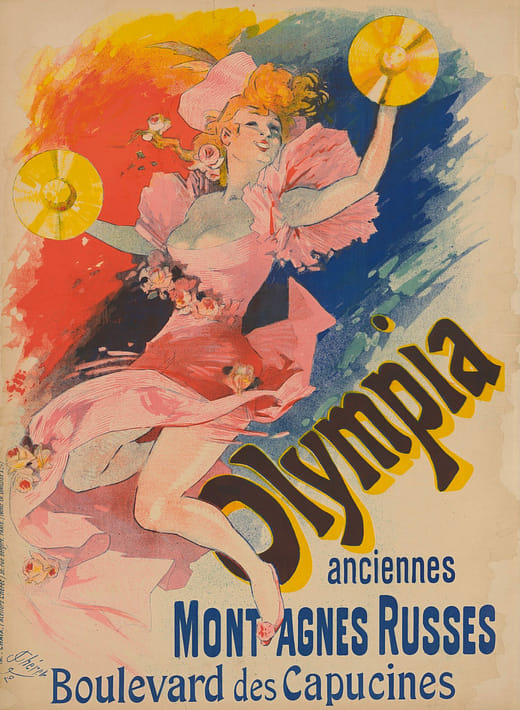
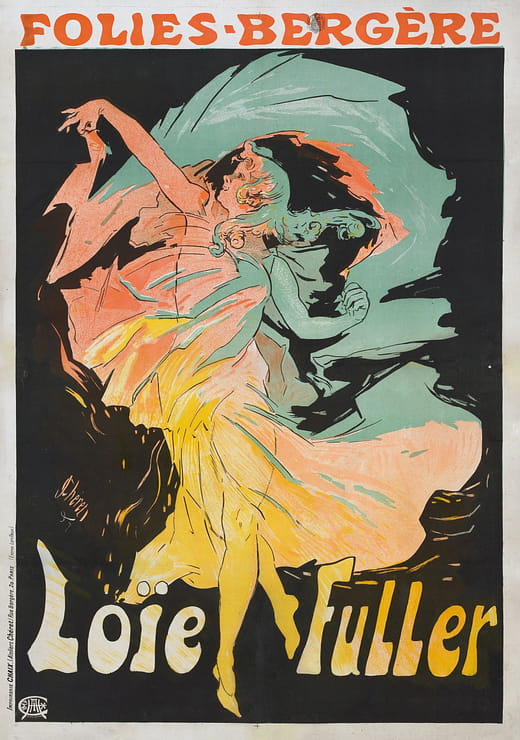
Henri de Toulouse-Lautrec, born in 1864, was a French nobleman and a pioneering figure bridging the Post-Impressionist and Modernist art movements. Influenced by Jules Chéret, the "Father of Modern Posters", Lautrec revolutionized 19th-century poster design and lithography during the Art Nouveau period. Rejecting traditional Western spatial perspectives, he embraced the flat, linear aesthetics of Japanese ukiyo-e prints, effectively conveying subjective spatial perceptions. His innovations in poster art earned him the title “Father of Poster Design”.
Born into an aristocratic family as the primary heir, Lautrec enjoyed a privileged upbringing and was deeply cherished by those around him. However, at the ages of 14 and 15, he suffered leg fractures in quick succession. These injuries, compounded by genetic disorders stemming from generations of aristocratic inbreeding, halted the development of his leg bones, leaving him a dwarf with a height of 150 cm. While his upper body developed normally, the imbalance placed immense strain on his lower body, eventually leading to paralysis in his later years. Despite these physical challenges, his unwavering love for art and passion for gastronomy remained undiminished. Beyond his artistic accomplishments, Lautrec co-authored a cookbook featuring an impressive 190 recipes.
Even though his physical condition was less robust than most, Lautrec's artistic talent and accomplishments established him as a towering figure in the Art Nouveau movement. His works are broadly categorized into two main types: oil paintings and lithographs. During his formative years, he created numerous sketches, watercolors, and oil paintings, exploring subjects such as landscapes, animals, and figures. As his technique evolved and reached maturity, Lautrec developed a distinct preference for portraiture during his prime creative period.
In 1888, Lautrec became captivated by the nightlife of Montmartre, a vibrant district in Paris, where he established his studio. Through his art, he vividly portrayed the dancers, singers, performers, and working-class individuals of the area. His prolific works not only depicted but also authentically captured the everyday lives of society’s marginalized figures, earning him the nickname "The Soul of Montmartre".
Frequently commissioned to create promotional posters for performances, Lautrec became renowned for his lithographic posters, which blended the linear composition techniques of Japanese ukiyo-e with his unique artistic style. These posters were a brilliant fusion of commerce and art, characterized by bold, exaggerated lines and even slightly grotesque expressions—a signature feature of Lautrec's poster period. However, his intent was not to distort or mock his subjects but to amplify their distinctive features. He skillfully incorporated the effects of dramatic stage lighting and heavy theatrical makeup into his works, capturing the vibrancy and immediacy of live performances. A famous example is his depiction of the popular actress Yvette Guilbert. Despite her striking beauty and well-defined features, Lautrec portrayed her with a sharp nose, thick lips, and an elongated neck, creating a comical caricature. Yvette was so displeased with this exaggerated representation that she wrote to protest. Unwavering in his artistic vision, Lautrec refused to compromise. Ironically, the stark contrast between Yvette's actual appearance and her caricature intrigued audiences, drawing even larger crowds to her performances and achieving an unexpected promotional success.
Despite his artistic brilliance, Lautrec's life was tragically cut short at 36 because of alcoholism and poor health, leading to complications from alcohol and syphilis. His works captured the essence of Art Nouveau society and profoundly influenced later artists, including Pablo Picasso, Vincent Van Gogh, and other Impressionist and Cubist artists. He is celebrated as a pivotal figure in the evolution of modern art.