The 18th-century European Industrial Revolution led to a reduction in printing costs and advancements in technology, which spurred a flourishing period for poster design. By the 19th century, posters had become more popular and sophisticated, evolving into a captivating art form in its own right.
In 1866, the French artist Jules Chéret, known as the “father of the modern poster”, brought the color lithography techniques he had learned in England back to France. He printed the first colored lithographic poster at his own printing press in Paris, marking the birth of modern poster design.
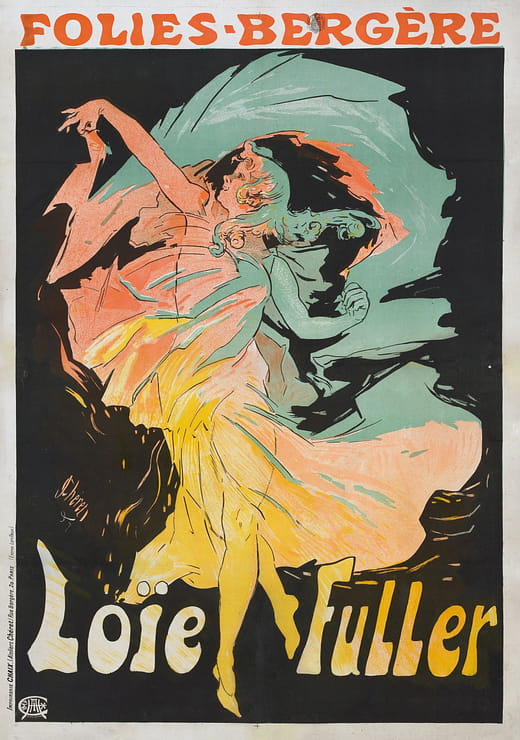
Skilled in both painting and lithography, Jules Chéret was a key figure during the Art Nouveau movement and Paris's Belle Époque. He designed over a thousand posters for a wide range of products, including food, perfumes, medicines, household goods, and theatrical performances. His signature style often featured female figures as the central subjects, with the product or event either becoming an accessory to the woman or fading into the background. This approach made his posters more like works of art than mere advertisements, as Chéret believed the purpose of a design was not to directly convey a product or event’s message, but rather to evoke an emotional response and immerse the viewer in the atmosphere of the poster. Chéret’s innovative approach was a departure from the traditional method of emphasizing the product. He made extensive use of bright, bold colors and fluid lines to capture the movement and elegance of the women in his posters, making them quintessential works of the early Art Nouveau period. He also introduced the first generation of large flatbed printing presses, capable of producing life-sized posters.
Unlike the portrayal of women in contemporary artwork, which often carried a critical or puritanical tone, Chéret's women were depicted in fashionable, beautiful attire, with graceful, flowing lines and vibrant, saturated colors that radiated joy and positivity. As a result, these women became known as “the Cherettes”, and the female figures in his posters set the fashion trend for young French women, who eagerly emulated the stylish looks. This earned Jules Chéret the title of “father of women's liberation”.
The “Olympia” Restaurant Concert Poster features vibrant, bold colors, showcasing a stylish, charming woman holding a metallic instrument—”a cymbal”—seemingly playing it with joy. Founded in 1888 by the renowned creator of the Moulin Rouge, Olympia was a versatile performance venue that hosted numerous exhibitions, music, and theater performances. Looking at Jules Chéret's poster, one can almost feel the lively, vibrant atmosphere of the performances at Olympia.