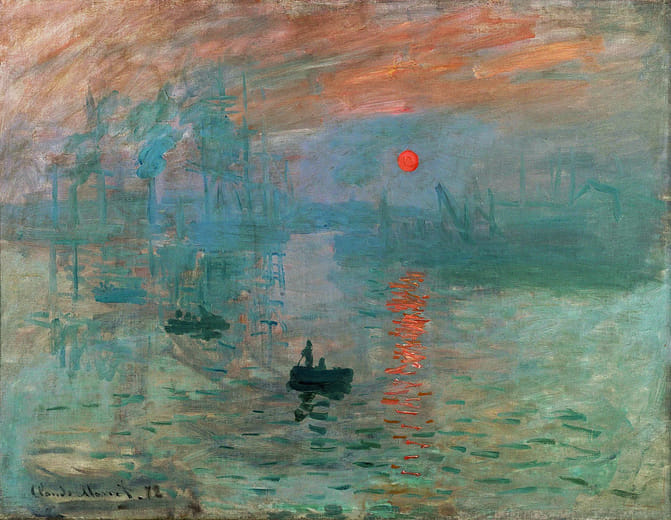
The featured work, painted in 1887, exemplifies this enduring legacy. Created during the artist’s later years in Éragny, it captures the serene beauty of the French countryside.
Camille Pissarro, a pioneer of Impressionism, was admired for his humility, kindness, and generosity toward younger artists. He remained committed to his craft despite significant challenges, including economic hardship and the debilitating effects of an eye condition that eventually forced him to paint indoors from his studio window. His resilience and dedication earned him the nickname “Moses of Impressionism”, a title reflecting his role as a revered mentor and role model within the movement.
Unlike many Impressionists, Pissarro emphasized the inherent color of objects, their natural tones, over the more ephemeral qualities of light and shadow often celebrated in the movement. His work was deeply rooted in personal authenticity, avoiding the dreamlike, elusive depictions typical of Impressionism. Instead, Pissarro infused his art with his love for life and his strong connection to traditional French rural culture. He focused on depicting natural landscapes, agricultural life, and the working class, celebrating the beauty and dignity of ordinary existence.
Over an artistic career spanning more than 40 years, Pissarro continually absorbed new ideas and techniques, merging them with his own innovations. His body of work reflects the evolving landscape of Impressionist art, showcasing its transformation while remaining a testament to his unwavering passion and belief in the power of art.
Between 1884 and 1888, Pissarro was drawn to the work of the younger Impressionist Georges Seurat and began experimenting with Pointillism. One notable piece from this period, Peasant House at Eragny, demonstrates his use of the Pointillist technique, capturing his beloved rural landscapes. The painting depicts an idyllic scene of sunny, tranquil countryside life, exuding a sense of harmony and simplicity. However, after exploring Pointillism for some time, Pissarro found that the technique fell short of fully expressing his genuine feelings and observations of nature. He felt it lacked the authenticity needed to capture the true essence of the natural world. As a result, he returned to his original approach, using feather-like brushstrokes to convey both his inner emotions and the external beauty he observed, a style that remained true to his artistic vision and personal connection to his surroundings.