Impressionism represents an era of passion and resilience, born from the unwavering creativity of a group of artists who challenged tradition and celebrated genuine camaraderie. This movement of freedom and innovation continues to captivate and inspire the world to this day.
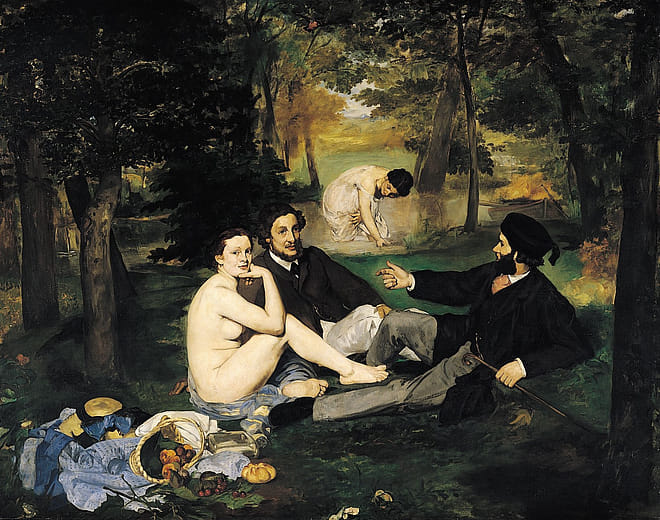
The roots of Impressionism can be traced back to 1863 when the rigid standards of the official Salon de Paris favored unflinching traditions, Neoclassicism, and Realism, leaving little room for innovation. Dissatisfied artists, driven by a desire to break free, caught the attention of Emperor Napoleon III, who intervened to establish the “Salon des Refusés (Salon of Rejects)”. This was a landmark exhibition in art history and a pivotal event in the development of contemporary art.
From that moment onward, artists gained the freedom to experiment with their craft and showcase their work independently, breaking the monopoly of the official Salon. Avant-garde and innovative artistic styles began to gain legitimacy, paving the way for Impressionist painters to hold their first independent exhibition in Paris in 1874. The exhibition featured 165 works by 30 artists, with the most iconic piece being Monet's Impression, Sunrise.
您現在看到的這張圖表,就清楚的顯示印象派畫家緊密的關係以及流派的演進。
The diagram you see here illustrates the close connections and evolution of Impressionist artists and their styles.
From this visual representation, you can clearly observe the connections between key figures. For example, the mutual friendship and artistic support between Monet and Manet. Despite their distinct creative styles, they inspired each other in their shared rebellion against traditional norms, playing pivotal roles in the emergence of Impressionism. Similarly, Renoir and Bazille shared an intimate bond, encouraging one another throughout their artistic endeavors. Through their collaborative works, they expressed a profound love for life.
Furthermore, the influence of Impressionism did not fade with time but instead paved the way for movements like Fauvism and Cubism. Cézanne's impact on Gauguin, as well as his profound inspiration for Picasso, demonstrates how later artists built upon the foundation of Impressionism, creating new styles that expanded the horizons of art and propelled it in innovative directions.
The interactions among these artists were more than friendships, they embodied a shared pursuit of artistic ideals. This chart reflects their deep emotional connections and allows us to witness how their collective efforts established Impressionism as an unshakable cornerstone of art history.
Impressionism was also an international movement. Originating in France, it gradually spread across Europe, then on to the Americas, Australia, Japan, and West Asia, where it evolved to incorporate unique regional styles and characteristics.