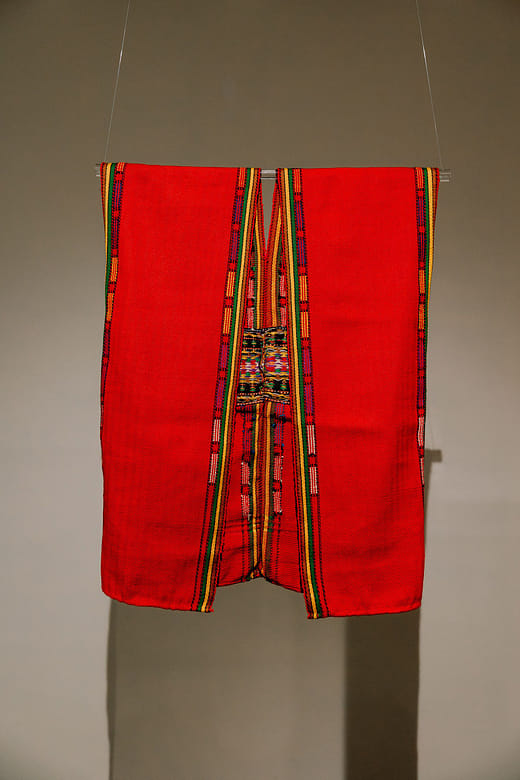
Ramie / 37 x 235 cm
Introduction
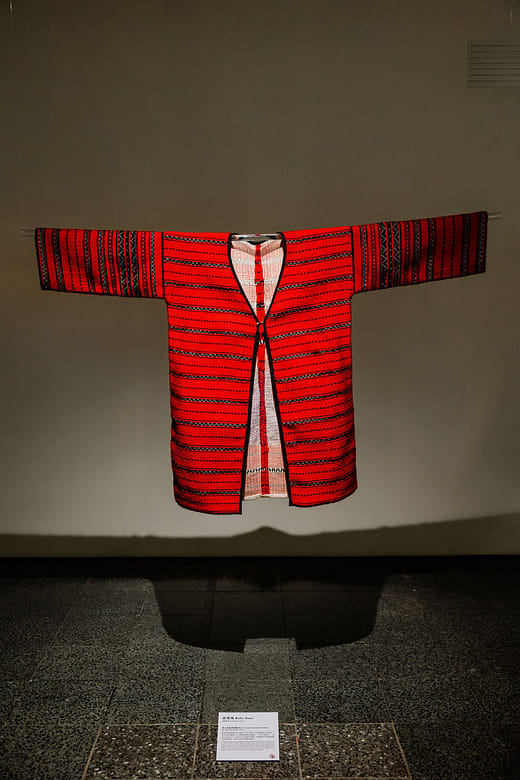
This work is made of ramie thread according to the traditional process. Before weaving, it must go through complicated processes such as planting, collecting, scraping, piling, and spinning. The collected raw hemp is scraped to remove impurities, remove fibers, and rub it with rice bran. Bleaching by "sun and night dew" for several consecutive days; and then twisting and connecting the shorter pieces of hemp into slender, even threads. It is then spun on a spindle and organized into coils on the upper frame to become a wire for later use. Dyeing and boiling thread uses natural plants such as wood ash, Ligusticum japonica leaf juice, and potato nut as dyes to make textile materials. The method is to boil the sliced potato nut and twine, then boil or hammer them, and then dip-dye them to make the color reddish brown; The juice of sero (Jiuxiang) leaves is rubbed with twine, stirred and buried in the soil of the rice field for several days to dye it black. The weaving technique uses a ratu weft pick pattern to create a more complex large rhombus pattern. Traditionally, this fabric was used to sew hilo quilts and sapo mattresses. In recent years, it has been used as tablecloths or hung as wall decorations.