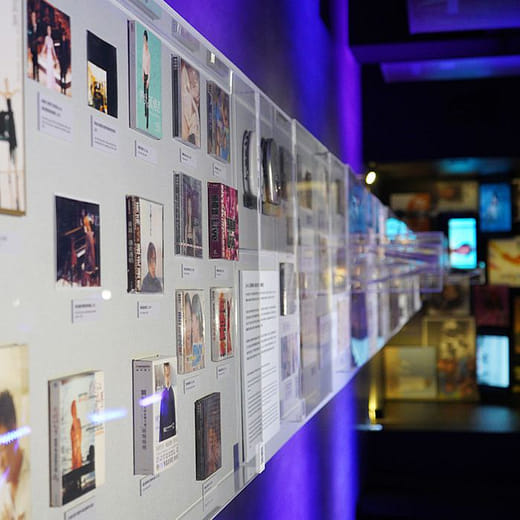
Popular music is a grand art, and it is also merchandise that can be purchased. After people buy albums and take them home, they happily put them into different players, from vinyl record players in the living room at home to Walkmans that played cassettes and CDs. Although the hardware may have changed, the joy and feelings people gain from music have never been distorted.
In this long tunnel through time, Chen Chih-Yuan was also experiencing his life journey. He taught himself music theory and the piano, without the guidance of teachers. Working as a musician at the US Army Club in central Taiwan, then playing gigs at various places, and later becoming a member of the Taiwan Television Big Band, he caught on to the campus folk song trend that swept all Taiwanese people off their feet. He arranged the music for the album “Golden Rhythm Awards” for the Synco Cultural Corporation, beginning his decades as an arranger. In the 1980s, he set the record for the number of arrangements by one person. In 1983, for example, more than half of the top 30 hits featured his musical arrangements.
Chen Chih-Yuan’s musical life closely followed the historic development of Taiwan’s popular music industry. In the folk song era of the early 1980s, he experienced the budding growth and exploration of popular music. Then he lived through the late 1980s, when the UFO Group strove to discover local idols; the peak period in the 1990s, when the five major record companies entered the Taiwan market; and the period after the Millennium, when factors such as pirating and digital streaming drove the decline of the record market and the rise of independent music. Popular music began to become segmented.
This long passage of time was Chen Chih-Yuan’s musical journey through life. Through precious historic clues such as news clips, published data, and musical media, we are able to explore the life of this low-key, introverted, mysterious figure who was behind the scenes for so long.