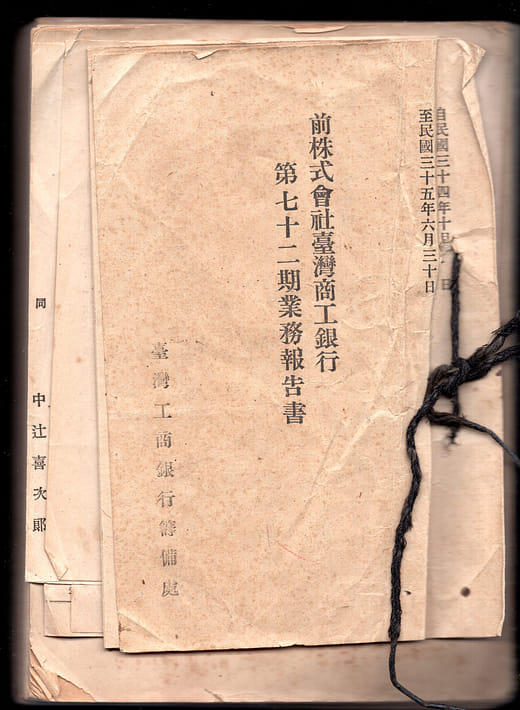
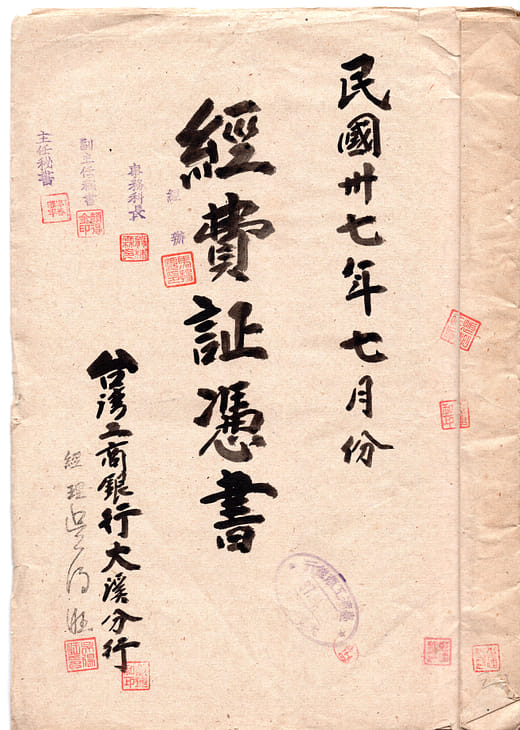
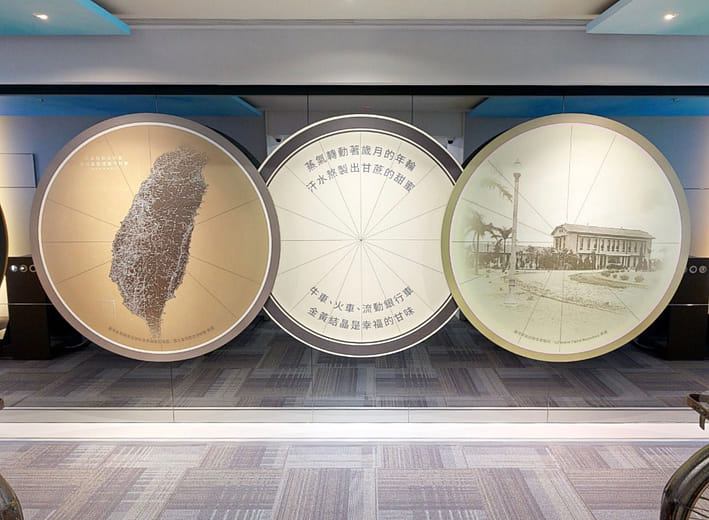
In August 1945, the Second World War ended. The following October, the National Government of the Republic of China assumed control of Japanese financial shares in Taiwan and initiated a restructuring of the financial system established during Japanese colonial rule. Commercial and Industrial Bank of Taiwan was reorganized and renamed “Taiwan Industrial and Commercial Bank” and became a government-owned bank under the administration of the Taiwan Provincial Government.
In 1949, in conjunction with the amendment of the “Banking Act of the Republic of China”, Taiwan Industrial and Commercial Bank was renamed yet again as “First Commercial Bank of Taiwan”, or “First Bank” for short. The post-war economy in Taiwan suffered from the recession and currency depreciation caused by the Chinese Civil War, which finally led to hyper Inflation. With the outbreak of the Korean War in 1950, US economic and military aid began pouring in, and so the government initiated a series of economic reforms in 1958, which culminated in the Central Bank resuming business in 1961 and the opening of the first export processing zone in 1966. Since then, Taiwan’s economy has gradually stabilized and grown.
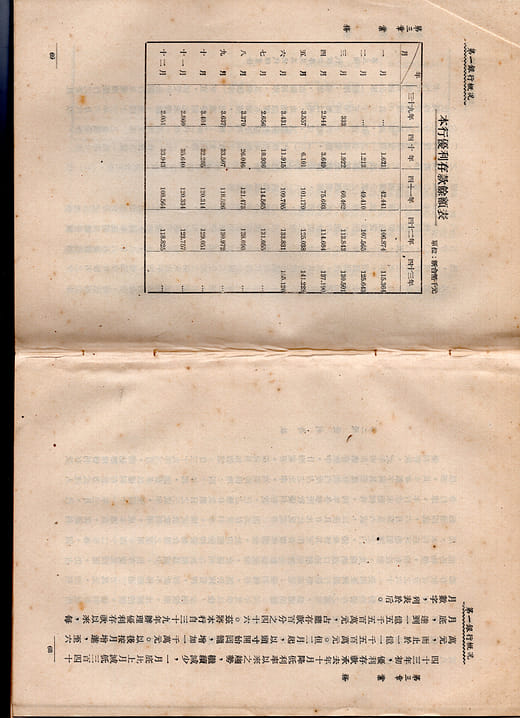
During the first half of the 1970s, the first oil crisis affected the global economy, leading to the dilemma over inflation and recession, which in turn caused a sharp decline in Taiwan’s economy. The government initiated ten major construction projects, forced a modernization of the currency and foreign exchange markets in line with international standard, and implemented numerous export policies to improve the investment environment and boost the economy. Stabilizing finance, improving banking business, and maintaining currency stability were required in the economic development in Taiwan. First Bank played an important role in helping the government stabilize prices through its handling of preferential rate deposit plans. It prioritized the support of businesses related to the livelihood of common people, and also supported the government policies to conform to international trends. First Bank adopted many new measures, including the launch of an internal savings department, a SME Service Center, and the opening of new branches and a foreign exchange business. In 1976, the Bank was renamed “First Commercial Bank” in order to better reflect its strategy of international business, a clear proof of its ambition to move forward from being a local bank to becoming an international powerhouse.