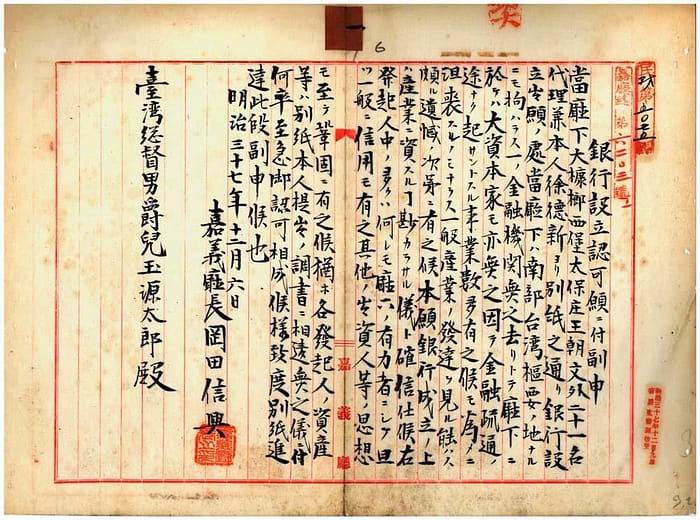
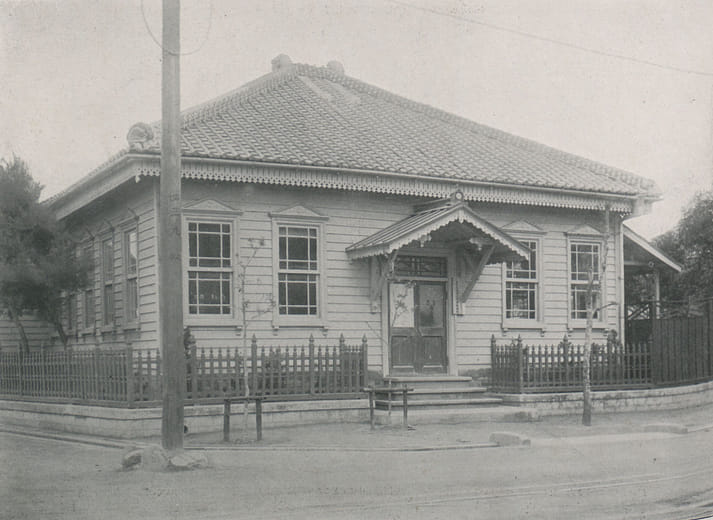
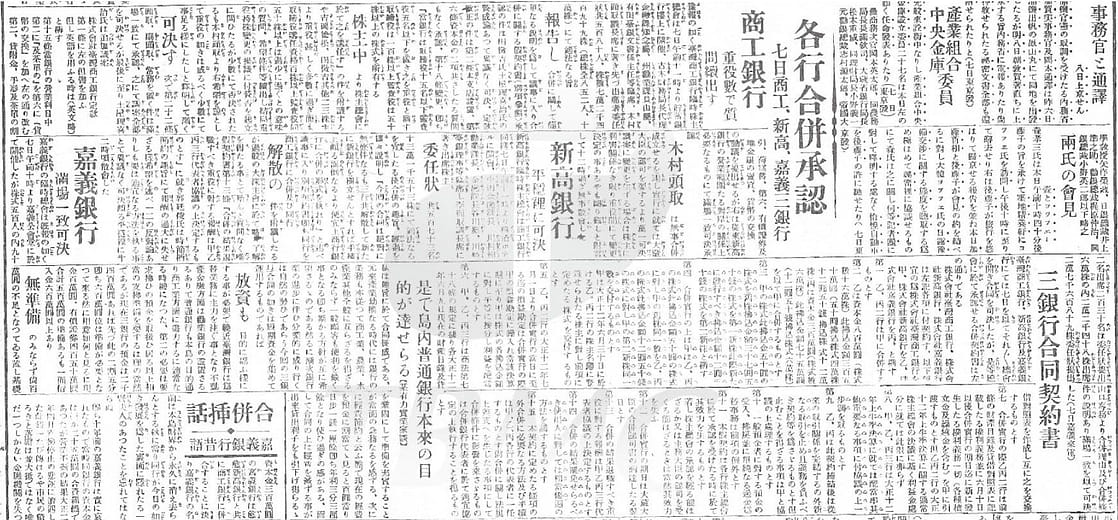
With the outbreak of First World War in 1914, many manufacturers moved production to Asia, which led to unprecedented economic prosperity in Japan, and subsequently a substantial spike in trade, industry, and financial growth in Taiwan. The fast and extensive growth in the export of Taiwanese processed agricultural products, such as tea, sugar, and camphor, led to an urgent need for financial support. In 1915, the leading tea merchants of Dadaocheng, Li Jingsheng, and his son Li Yanxi, took the initiative to set up Hsin-Kao Bank with a capital of 500,000 yen. Their idea was to promote the tea industry and facilitate currency exchange with the Bank. From the outset, the Bank worked to meet financial demands and business expanded quickly. This development was further helped by the fact that the Bank’s financial schemes were in line with the Japanese government’s policy of rewarding sugar and rice production. In 1920, the capital of Hsin-Kao Bank increased to 8 million yen while the number of branches grew to 21, with 19 of them opening in Taiwan and 2 opening in Xiamen and Fuzhou respectively.