1. To Perceive
2. To Concentrate
3. To Move
Year of Composition: 1971
*Chamber music (piano trio)
“Three Chapters of Revolution” is a piano trio piece comprising three movements, namely, “To Perceive,” “To Concentrate,” and “To Move,” which is inspired by works of Bartok, Kodaly, and Dvorak, as well as Yu Da-Gang’s Luogu Jing (鑼鼓經; notations for gong and drum music). Li Tai-Hsiang ingeniously translated the sounds of gongs and drums into piano music, and created his unique expression of “gong and drum music for piano” in “Three Chapters of Revolution.”
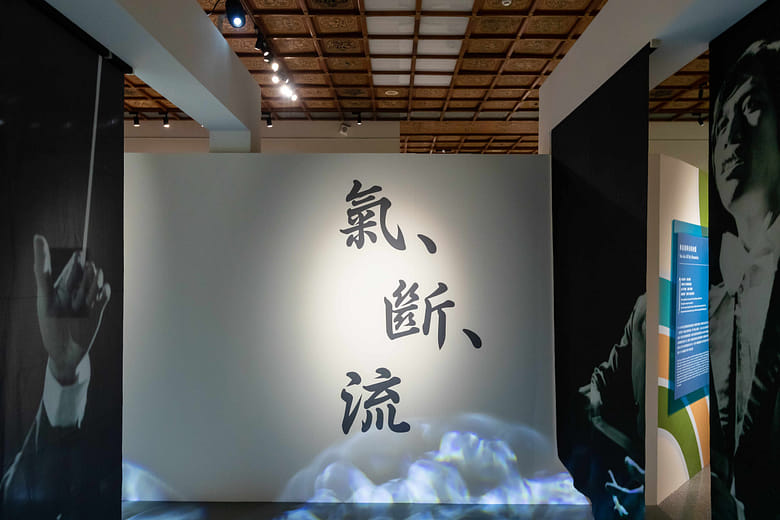
Li used piano to imitate the lingering sounds and layered rhythm of gongs and drums, and shifted the sliding notes of huqin and the flicking effect to string music, replacing human vocals with string music while giving the string instruments a sound quality that is dry, rough, dark, and coarse. The artistic conception of “Three Chapters of Revolution” conforms to the idea of “perceiving, concentrating, and moving” in the art of tai chi. The initial version of the composition was only seven minutes long. A decade later, Li composed “Breath, Break, Flow” as a continuation, which is twenty-five minutes in length and becomes one of his iconic pieces. These works have demonstrated Li’s innovation in blending traditional Chinese and Western music.
Source: Chiou, Joyce Y. Senior Musician Series, Vol. 20—Li Tai-Hsiang: The Beautiful Mistakes. Taipei City: China Times Publishing, 2002.