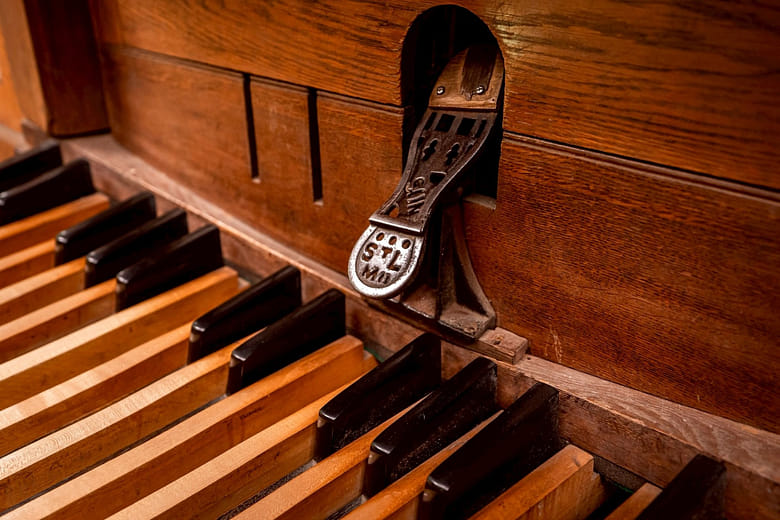
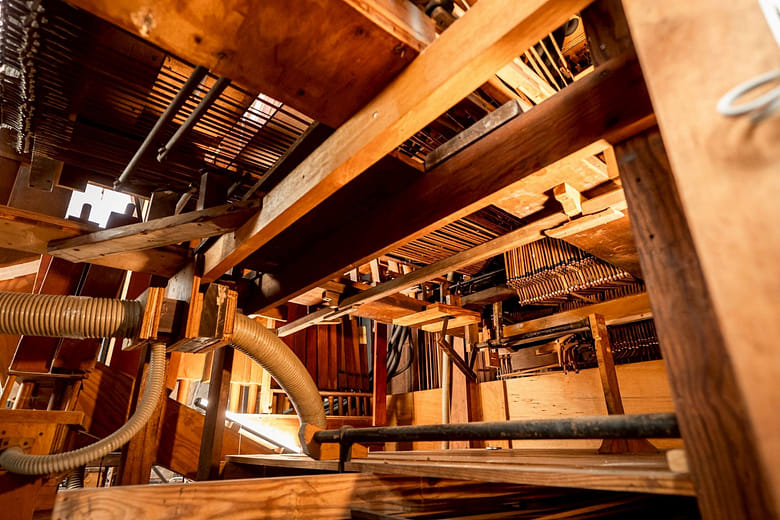
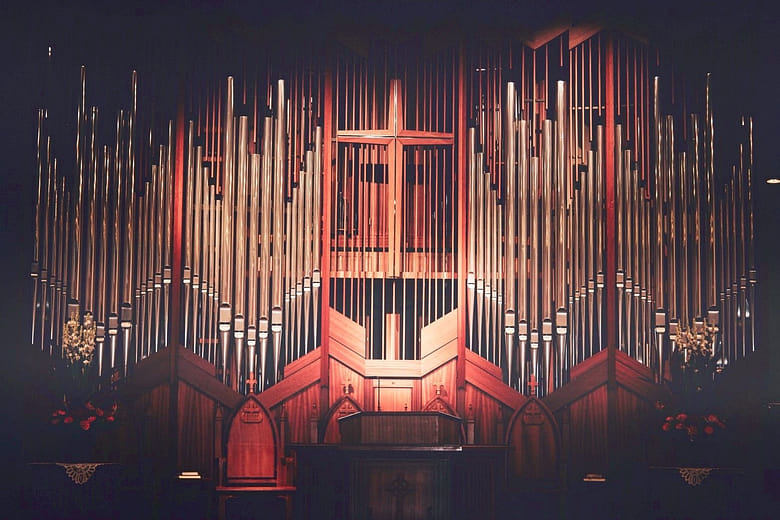
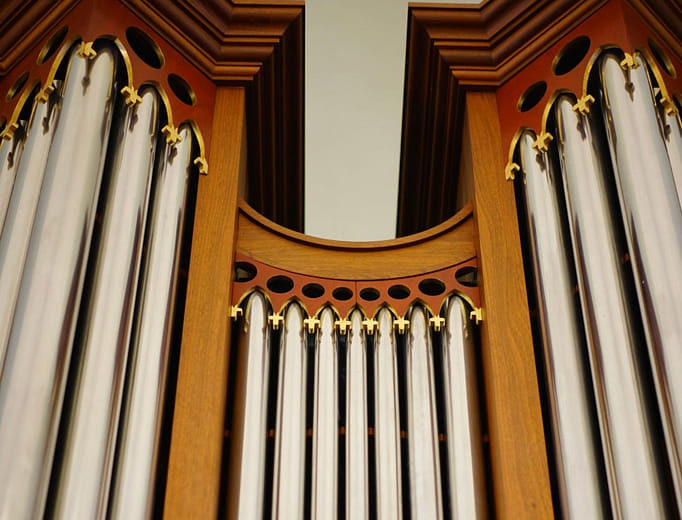
由 1005 支金屬與木質音管組成,排列縝密,各司其職,是聲響產生的核心機制,亦反映空間與建築的聲響共鳴。
音管主要分成兩大類:笛管(Flute Pipes)與簧片管(Reed Pipes)。
木製笛管(Wooden Flute Pipes),音色溫潤厚實,其成份以胡桃木、橡木、楓木、松木為主,製作方式是由四面木板所合成的,其樣貌為方形,聲音類似於木笛。
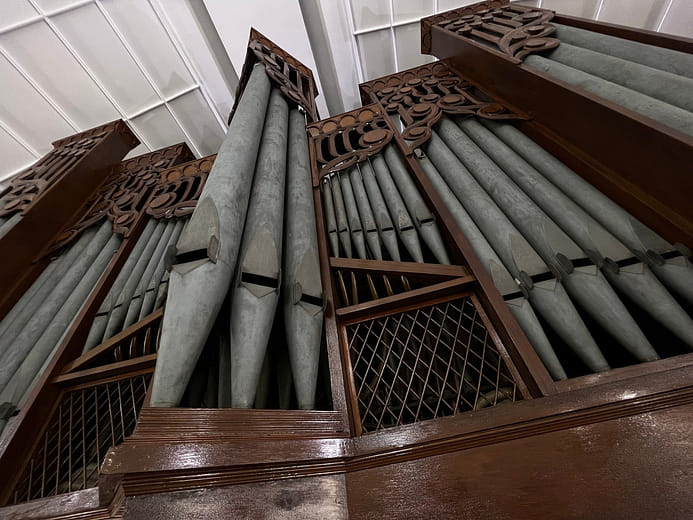
金屬笛管(Metallic Flute Pipes),也可稱主要音管,這是管風琴最基本的音色,音色清亮透明,其成份以錫、亞鉛、銅、鋅等金屬為主,依照不同音色而調配出不同金屬比例混製,經由焊接形成,其樣貌為圓筒形或圓錐形。
簧片音管(Reed Pipes),音色宏亮穿透,在金屬音管中加裝簧片,當空氣進入音管時,音管內的簧片振動,帶動共振音管中的空氣柱。在音管上有一根「調音桿」,其控制著簧片自由震動的長度來改變音調,就像按在小提琴琴弦上的手指一樣。其音管樣貌為開口圓錐形。
This organ consists of 1,005 metal and wooden pipes, precisely arranged to fulfill different roles. They form the core sound-producing mechanism and embody the acoustic resonance of the architectural space.
Organ pipes are generally divided into two main categories: flue pipes and reed pipes.
Wooden Flute Pipes
Warm and full-bodied in tone, these are typically made from walnut, oak, maple, or pine. Constructed from four joined wooden boards, they are square in shape and produce a sound similar to that of a wooden flute.
Metallic Flute Pipes
Also known as principal pipes, these provide the fundamental organ tone, bright and transparent in character. They are made from alloys of tin, zinc, copper, and other metals, with varying proportions used to shape different timbres. The pipes are formed by soldering the metals into cylindrical or conical shapes.
Reed Pipes
Powerful and penetrating in tone, reed pipes contain a vibrating metal reed inside the pipe. When air enters, the reed vibrates, exciting the air column within the resonator. Each pipe includes a tuning wire, which adjusts the reed’s vibrating length to alter pitch, much like a violinist’s finger on a string. These pipes are typically open and conical in form.