響徹殿堂—對於臺灣音樂發展的貢獻與成就 Echoing Through the Halls — Contributions to Taiwanese Music and Lasting Legacy
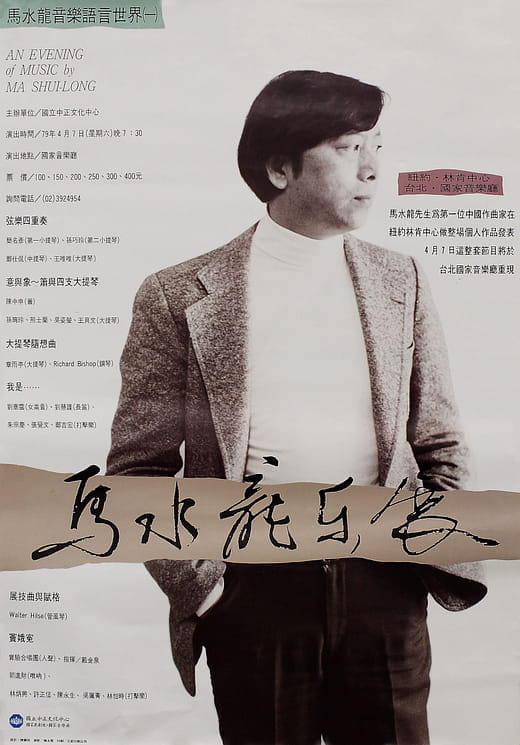
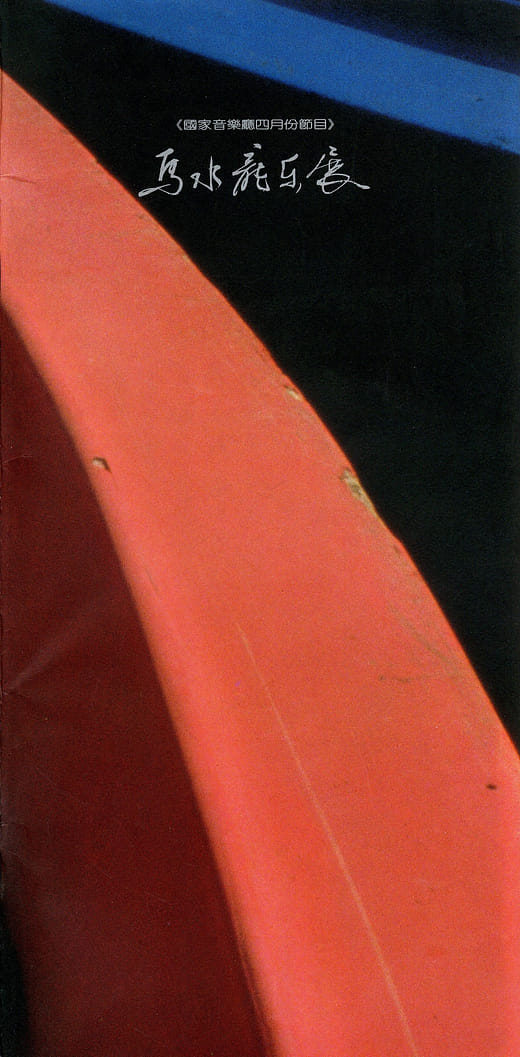
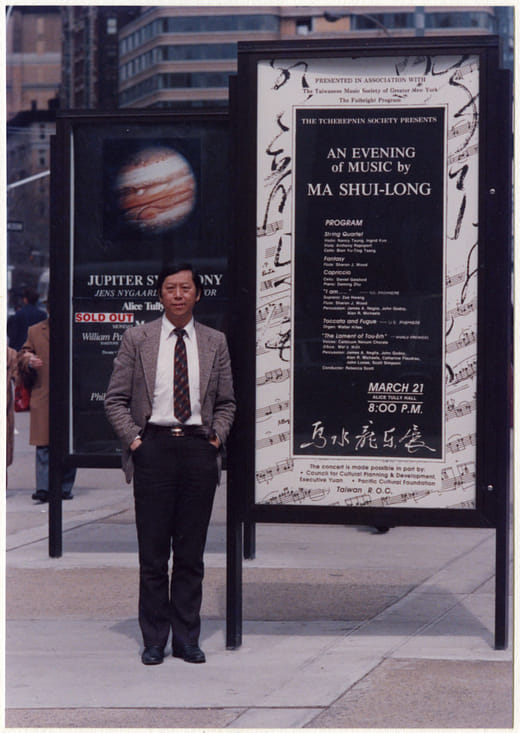
1986 年,馬水龍獲得美國國務院傅爾布萊特學術獎助,得以在忙碌的系主任工作之餘,赴美進行為期一年的研究之旅,也大幅提振了他的創作能量與信心。他在紐約林肯中心等地舉行四場「馬水龍樂展」,是首位在林肯中心完整呈現個展的台灣作曲家。《紐約時報》評論他突破東西方音樂藩籬,成功融合兩者的表現語彙,展現其文化內涵與思想深度。此行不僅為他帶來國際聲望,也讓他於1991年入選《世界名人錄》與《五百名人錄》。1994年他辭去院長之職後,再度獲文建會補助赴美,並於耶魯、哈佛等校發表專題演講。
1991 年,馬水龍出任亞洲作曲家聯盟中華民國總會暨作曲家協會理事長,同時受託規劃「邱再興文教基金會」及其推動的「春秋樂集」,致力於發表國內作曲家的新作。第一階段 1991 至 2001 年,11 年間,就演出了一百三十多首創作,期間並舉辦作曲比賽、音樂節等,成績斐然。第二階段 2010-2016,由於當代作品發表的機會多了,「春秋樂集」的曲目,納進了經典的弦樂四重奏作品,而參與的現代作曲家仍接近 40 位。
1997 至 2012 年,馬水龍的創作有室內樂 6 首,包含紀念邱再興夫人許秀桂 女士的《懷念》(為雙簧管與鋼琴,1998),分別為兒子馬徹、馬健婚禮寫的《祝福》(為小提琴、大提琴與豎琴,1998)和《木管五重奏》(2002),另二首則是 《琵琶與弦樂四重奏》(2000)、《白鷺鷥的願望》(為鋼琴與弦四,2002);還有大型力作《無形的神殿》(為男聲合唱與管弦樂,2006),是一部讚頌玉山與原住民族的磅礡大作。
In 1986, Ma Shui-Long was awarded a Fulbright Research Grant by the U.S. Department of State, allowing him a rare pause from his demanding academic duties to embark on a year-long research journey in the United States. This experience not only reinvigorated his creative energy and confidence, but also catapulted him onto the international stage. He held a series of four concerts titled “An Evening of Music by Ma Shui-Long” in major cities including New York’s Lincoln Center, making him the first Taiwanese composer to present a full solo program at this prestigious venue.
The New York Times praised his ability to transcend the boundaries between Eastern and
Western music, commending his seamless integration of both expressive vocabularies and
the cultural and intellectual depth embodied in his work.
The New York Times praised Ma for his deft combination of Eastern and Western classical music, saying he "let his instruments speak in a European voice but with an Asian mind.”This international recognition led to his inclusion in Who’s Who in the World and 500 Famous People in 1991. After stepping down as president of the National Institute of the Arts in 1994, Ma returned to the U.S. with support from Taiwan’s Council for Cultural Affairs, delivering lectures at Yale, Harvard, and other leading institutions.
In 1991, Ma was appointed President of the Asian Composers League, ROC Chapter, as well as Chair of the Composers’ Association of the Republic of China. That same year, he was invited to help establish the Chew’s Culture Foundation, where he launched the Spring & Autumn Concert Series—a platform dedicated to the performance of new works by Taiwanese composers. During its first phase (1991–2001), over 130 compositions were premiered in just 11 years, alongside composition competitions and music festivals that significantly shaped the local contemporary music scene.
In its second phase (2010–2016), as opportunities for contemporary works expanded, the program incorporated classical string quartet literature while continuing to feature works by nearly 40 living Taiwanese composers. The series became a vital force in nurturing and showcasing Taiwan’s compositional voices.
From 1997 to 2012, Ma produced six chamber works that reflect both personal and commemorative dimensions. These include:
– In Memoriam (for oboe and piano, 1998), dedicated to the late Hsu Hsiu-Kuei, wife of cultural patron Chiu Tsai-Hsin;
– Blessing (for violin, cello, and harp, 1998), composed for the wedding of his eldest son, Ma Che;
– Woodwind Quintet (2002), written for the wedding of his second son, Ma Chien;
– For Pipa and String Quartet (2000);
– The Egret’s Wishes (for piano and string quartet, 2002).
His major late-period achievement, The Invisible Temple (2006), is a monumental composition for male chorus and orchestra, a powerful tribute to Yushan (Jade Mountain) and Taiwan’s Indigenous cultures. It stands as one of the most awe-inspiring works in Taiwan’s contemporary choral-orchestral repertoire.