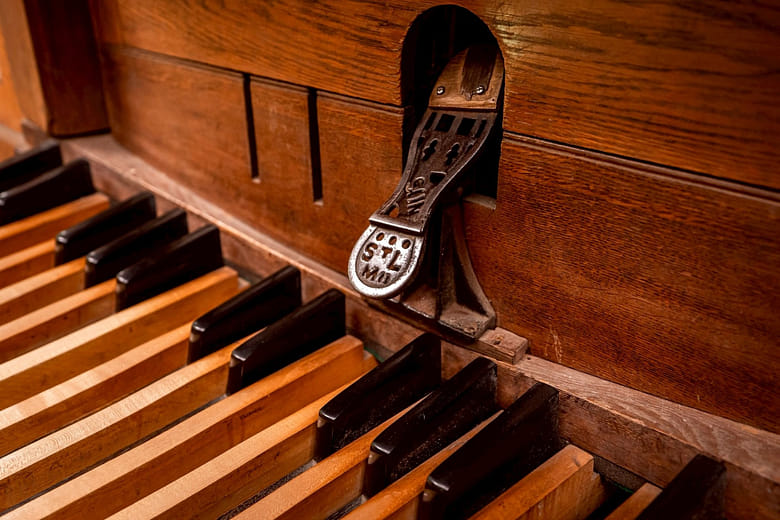
琴台(Console)
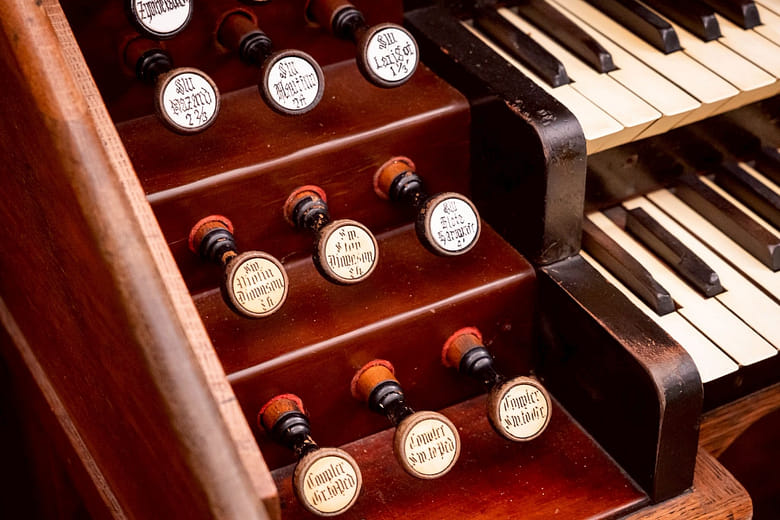
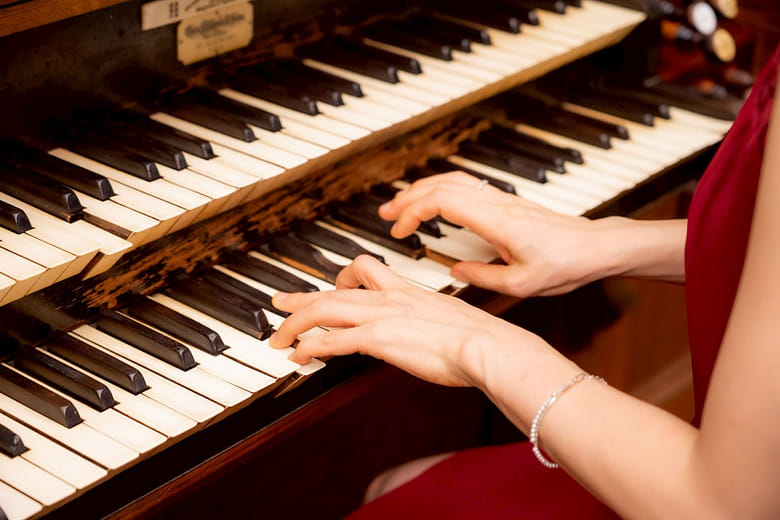
是管風琴的中央控制台,演奏家將音樂的想法,透過這裡的設備(包含音栓、預設鈕、手鍵盤、腳鍵盤、音栓、增音踏板和漸強踏板等)彈奏、設定與變換,呈現出美妙的管風琴音樂。
琴台共分為兩種形式:
機械式琴台(Mechanical Console) 範例:國家音樂廳管風琴琴台
管風琴一直以來都是以機械原理的方式操作與控制,從發聲原理就可以了解,由於琴鍵需藉由長長的牽引裝置連接至活門,
因此會看到琴台須依附著管座,演奏家往往都是背對著觀眾或只看到他的側面。
電子式琴台(Electronic Console) 範例:衛武營國家藝術文化中心管風琴琴台
隨著科技進步,長長的牽引裝置被電子訊號傳輸取代,因此琴台可以自由移動,不需永遠依附著管座,如此演奏家就可以依照視覺位置或配合樂團合奏位置移動擺設。
預設鈕(Combination)
又稱為組合設定鈕,隨著音栓的增加、科技進步,以及作曲家要求的音色變化複雜,需將演奏家呈現的不同音栓組合,事先透過電腦記憶的方式設定,是演奏浪漫、現代樂派作品極為重要的輔助功能。
增音踏板(Swell Pedal)
增音鍵盤的音管是由一個音箱(Swell box)包圍起來,透過腳踏板控制音箱上的百葉窗門板開關大小程度,而產生音樂的漸強漸弱之力度效果。漸弱之力度效果。
The Console
The console is the central control station of the organ. It is where the organist transforms musical ideas into sound, using manuals, pedalboard, stops, pistons, swell and crescendo pedals to create and modify the organ’s tonal palette.
There are two main types of consoles:
Mechanical Console
Example: National Concert Hall Organ Console
Traditionally, pipe organs have been operated mechanically. Each key is connected via long tracker action to the windchest valves. Consequently, the console is fixed to the organ case, and the performer usually faces away from the audience or appears only in profile.
Electronic Console
Example: National Kaohsiung Center for the Arts (Weiwuying) Organ Console
With modern technology, long tracker action has been replaced by electronic signal transmission. This allows the console to be mobile, no longer fixed to the organ case. Thus, the organist can be positioned according to visual preference or ensemble requirements.
Combination Pistons
Also called preset pistons, these allow organists to store and recall specific stop combinations. With the increasing number of stops, technological advances, and composers’ demands for more complex tonal shifts, combination pistons have become an essential tool, especially for Romantic and contemporary repertoire.
Swell Pedal
Pipes of the swell division are enclosed in a swell box, whose shutters are controlled by a foot pedal. By opening or closing the shutters, the organist can produce crescendos and diminuendos, adding expressive dynamic shading to the music.