巴赫 C 小調〈帕薩卡利亞與賦格〉BWV 582 :踏板低音先拋出八小節主題,像心跳般循環前行;變奏層層加疊,音栓從素樸一路點亮到滿室輝煌,最後在賦格裡多聲部追逐、交錯成光。
被稱為「音樂之父」的巴赫,綜攝德意志對位、義大利旋律與法國舞曲,奠定後世和聲與曲式語法。由此一曲,帶觀眾展開樂派地圖:古典時期講求均衡與明晰(海頓、莫札特);浪漫時期擴張形式與色彩,催生「交響風琴」(弗朗克、維多爾);二十世紀則以現代和聲與靈性光影開拓聲景(杜呂弗雷、梅湘)。一首巴赫,打開古典音樂的全景。
J.S. Bach’s Passacaglia and Fugue in C minor, BWV 582: the pedal bass first casts out its eight-measure theme, pulsing forward like a heartbeat. Variations build layer upon layer, with stops illuminating the space from plain simplicity to radiant brilliance, culminating in the fugue where multiple voices chase and intertwine into light.
Bach—known as the “Father of Music”—synthesized German counterpoint, Italian melody, and French dance, laying the foundation for harmony and formal structures in later generations. From this single work, the audience is led across a musical map: the Classical era’s pursuit of balance and clarity (Haydn, Mozart); the Romantic era’s expansion of form and color, giving rise to the “symphonic organ” (Franck, Widor); and the twentieth century’s exploration of modern harmonies and luminous spirituality (Duruflé, Messiaen). One piece by Bach opens the panorama of classical music.
--------------------------------------------------
樂器之王的冷知識
最早的風琴
在文獻上,西元前三世紀,由古希臘時代的亞歷山大城工程師克提西比奧(Ktesibris)所發明。當時稱之學 “Hydraulos” 的樂器,是水壓控制風箱的風琴(Wasserorgel)。
第一台置於教堂的風琴
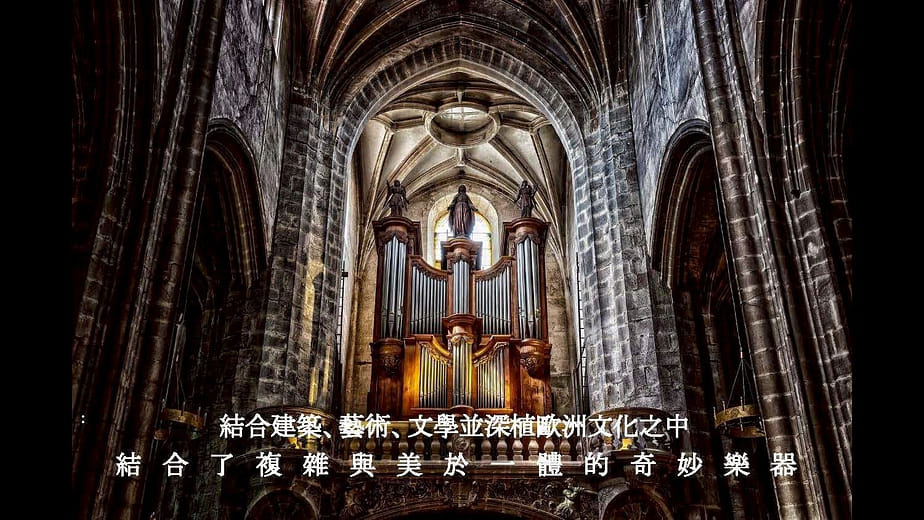
西元 824 年出現在阿肯(Achen)大教堂,從此管風琴逐漸成為中大型教堂的標準配置。
教會音樂家
在教會工作的合唱團指揮,管風琴家,音樂總監,駐堂樂師及領唱者,歌唱家,皆接受過嚴格的音樂訓練。
教會管風琴師
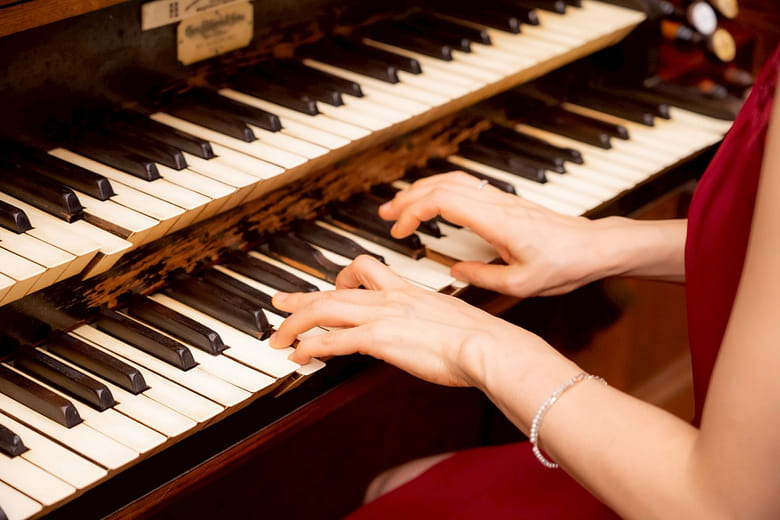
負責禮儀音樂的演奏。演奏技巧需手腳並用,大規模的教堂有二至三位管風琴師來分擔職務,有時兼職音樂總監與合唱團指揮。
音樂會管風琴家
因應新型音樂廳管風琴的興建與地方藝術節的興盛,管風琴師不再固守教堂的職位,力求創新突破,以成為音樂會管風琴演奏家(concert organist)為職志,除經典外,致力於開發管風琴的各種可能性。
劇院管風琴師
劇院管風琴(在英國尤指電影管風琴)是 二十世紀初期為無聲電影伴奏而開發的一種管風琴,到五O年代前為鼎盛時期,僱用了相當多的管風琴演奏家,有獨立的曲目和演奏風格。
最早的管風琴樂譜
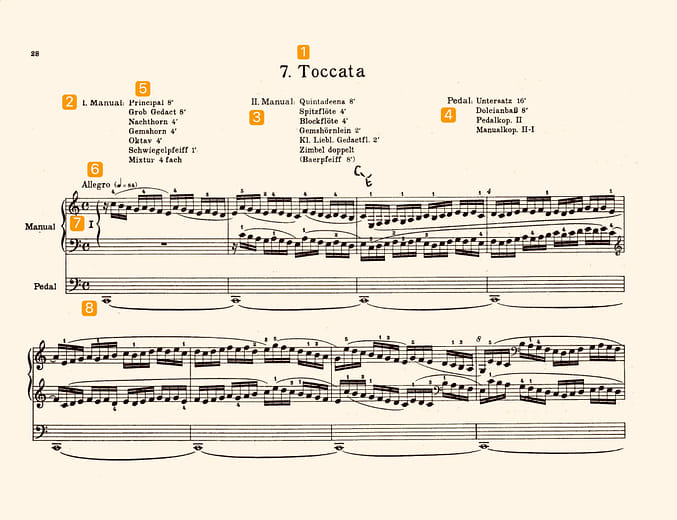
現存於英國博物館羅氏抄本 Robertsbridge Kodex (~1316年)
從抄譜法推測,屬法國或義大利的樂譜,並可看出管風琴早期的兩種典型曲式:舞曲及歌謠改編曲。
The Earliest Organs
According to historical records, the first organ was invented in the 3rd century BC by the Alexandrian engineer Ktesibios in ancient Greece. Known as the Hydraulos, this water organ (German: Wasserorgel) employed water pressure to regulate its bellows.
The First Organ Installed in a Church
In 824 AD, the first organ appeared in Aachen Cathedral. From then on, the pipe organ gradually became a standard fixture in medium and large churches.
Church Musicians
Within the church, musicians such as choir conductors, organists, music directors, resident church musicians, cantors, and singers all received rigorous musical training.
Church Organists
Organists were responsible for performing liturgical music. Their playing required the combined use of both hands and feet. In large cathedrals, two or three organists might share responsibilities, sometimes doubling as music directors or choir conductors.
Concert Organists
With the rise of modern concert hall organs and regional festivals, organists have moved beyond purely ecclesiastical positions, striving for innovation and artistic breakthroughs. Many have pursued careers as concert organists, expanding the repertoire beyond the classics and exploring the instrument’s vast possibilities.
Theatre Organists
The theatre organ (particularly the cinema organ in the UK) was developed in the early 20th century to accompany silent films. It reached its peak during the 1920s–1950s, employing a great number of organists with their own independent repertoire and performance style.
The Earliest Surviving Organ Music
The oldest extant organ manuscript is the Robertsbridge Codex (~1316), housed in the British Museum. Based on its notation style, scholars suggest it originated in France or Italy. It reveals two of the earliest organ genres: dance pieces and vocal song adaptations.