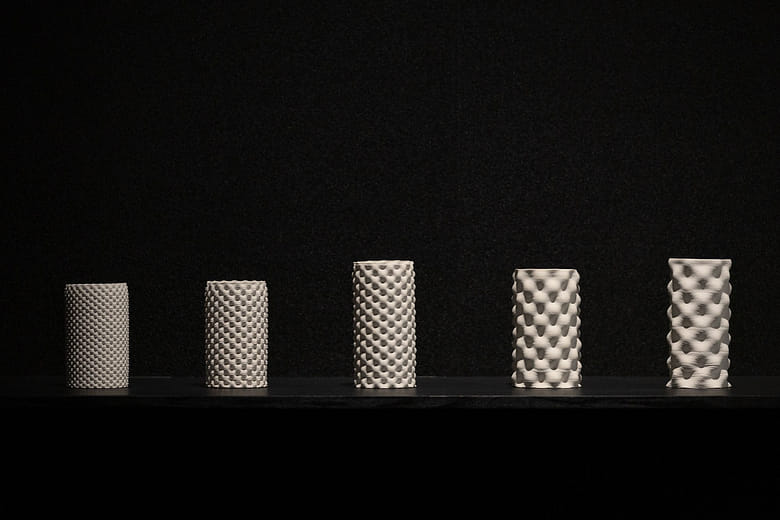
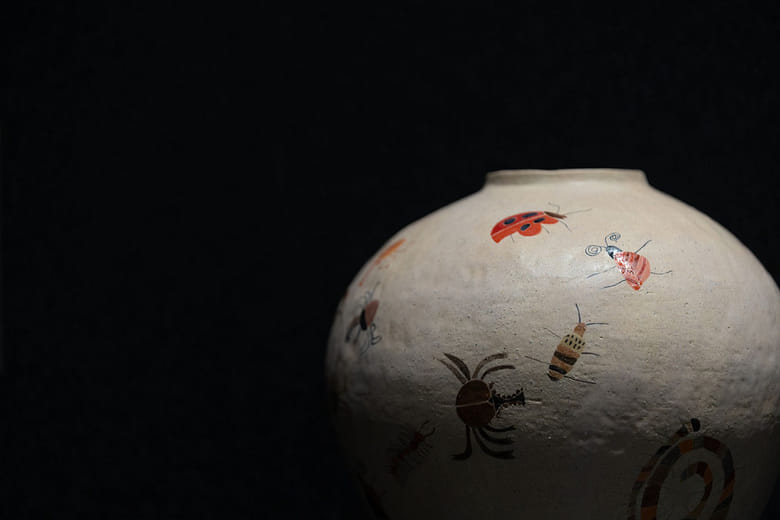
擁有工業設計背景,王怡方創作時卻傾向選擇「反工業設計」的形式,以各式各樣的材質與陶土碰撞,看似「亂來」的作法,燒製過程中更是難以預期成果,充滿不確定性的狀態反而讓工藝家更期待。透過實驗性的創作手法發現新質感,進而能夠發展不同的創作方式。
身兼Caco Mag可口雜誌專欄作者,王怡方受邀由可口舉辦的「芙烈達.卡蘿藝術亡靈節之夜」活動,以「芙烈達.卡蘿房間」為命題創作。王怡方延續自東京便展開《陶瓷的肖像畫》的計畫,透過芙烈達的遺物、攝影集、電影等媒介,想像著訪談墨西哥藝術家芙烈達的情境,本就是芙烈達「粉絲」的她,為了創作而更試著揣摩芙烈達的心境,過程中感受到藝術家身體的痛,也閱讀到她對於生命的韌性、對於愛情的轟烈,以及思想自由與禁錮的身軀,還有作為女性的溫柔與堅強。
因此,王怡方以自身翻模石膏,製成複合媒材的蕾絲胸衣,由束縛脫胎換骨幻化成美麗蝴蝶的意象,也可在胸衣蕾絲上見得。王怡方也以陶重現與再詮釋芙烈達自畫像裡的頭飾、荊棘項鍊,亦是表達共享脆弱而堅硬的特質,而可自由拆卸的蝴蝶、蜂鳥,則彷彿象徵著靈魂的翱翔。
With a background in industrial design, Wang Evon gravitates towards an anti-industrial approach in her creative process. She experiments with a diverse range of materials, including clay, embracing the unpredictable results of the firing process. This element of uncertainty not only intrigues her but also fuels her anticipation. Her experimental methods allow her to uncover new textures and develop innovative ways of crafting.
As a columnist for Caco Mag, Wang was invited to participate in the "Frida Kahlo’s Día de los Muertos Night" event hosted by the magazine, with the theme “Frida Kahlo’s Room.” Building on her ongoing project Portraits in Ceramics, which she started in Tokyo, Wang drew inspiration from Frida’s personal belongings, photographs, and films. Imagining a conversation with the Mexican artist, she delved into Kahlo’s life, resonating deeply with her pain, resilience, fiery love, and the contrast between her free spirit and the physical constraints of her body. Through this process, Wang also connected with the tenderness and strength of being a woman.
In response, Wang created a composite lace corset using a plaster mold of her own body. The corset symbolizes transformation—from the constraints of a cocoon to the emergence of a beautiful butterfly, a motif subtly reflected in the lace patterns. Wang also reimagined and recreated Frida’s iconic headpiece and thorn necklace in clay, expressing a shared fragility and resilience. The detachable butterfly and hummingbird elements evoke the soaring of the soul, encapsulating freedom and transcendence.
王怡方
1990年生,曾任工業產品設計師,偶然接觸做陶,感受到對於陶土材料的熱愛,在與陶藝前輩學習的路上立定工藝志向,前往日本多摩美術大學就讀研究所,鑽研陶瓷創作,在設計與藝術雙背景的經歷下,橫跨生活 陶與創作陶領域。 生活裡的個人哲思反映在作品之中,從墨西哥藝術家芙烈達的頭飾、項鍊及繃帶胸衣之中,反思其苦痛、束 縛與對於生命的熱愛,對比蝴蝶破繭而出的脫胎換骨,也回應身為女性同時擁有堅強、脆弱、溫柔、強悍的 力量。而經常駐村旅居世界各地的王怡方,也帶著自製的旅行茶組,於駐足之地沏一壺茶,與各國友人分享 茶道儀式,以茶會友,更以陶入魂。
Wang Evon
Wang Evon, born in 1990, started her career as an industrial product designer before discovering her love for ceramics. Encouraged by mentors, she decided to focus on crafts and pursued advanced studies in ceramic art at Tama Art University in Japan. With her combined experience in design and art, Wang skillfully creates both functional and artistic ceramic pieces.
Her personal philosophy shines through her work, inspired by Mexican artist Frida Kahlo's iconic headdresses, necklaces, and corsets. Wang’s creations explore themes of pain, constraint, and a deep appreciation for life, symbolized by the transformative journey of a butterfly emerging from its cocoon. This reflects her view of womanhood as a balance of strength, vulnerability, gentleness, and resilience. As an artist-in-residence in various countries, Wang often carries a handmade travel tea set, hosting tea ceremonies to connect with people worldwide. Through these shared moments, she blends her passion for tea with her art, bringing warmth and meaning to her ceramic creations.